The Republic of Moldova is taking part in one of the most important international platforms dedicated to the governance of the future, bringing forward its practical experience in adapting the rule of law to digital transformation and contemporary security challenges, TRIBUNA reports.
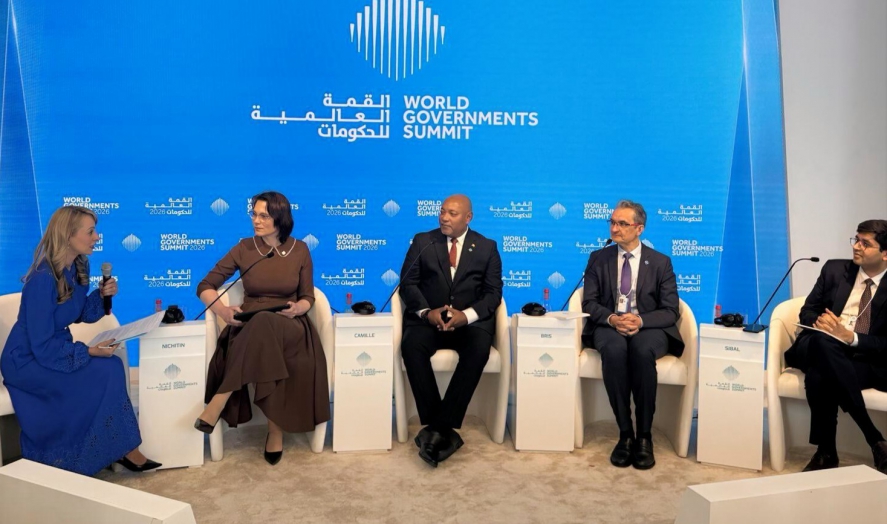
Between 3–5 February, the Minister of Internal Affairs, Daniella Misail‑Nichitin, is participating in the World Government Summit, held in Dubai, United Arab Emirates. The event brings together more than 60 heads of state and government, over 500 ministers, leaders of international institutions, experts, and private‑sector representatives from more than 150 countries, in order to identify applicable solutions in a global context marked by accelerated change.
During her intervention on the panel dedicated to how the rule of law can remain functional and credible in a world shaped by digitalization, artificial intelligence and hybrid threats, the Minister highlighted that Moldovan institutions are simultaneously managing security pressures, institutional transformation processes and technological modernization.
Daniella Misail‑Nichitin emphasized that, for Moldova, the rule of law is a mechanism for protecting citizens in a regional context marked by the war in Ukraine and persistent hybrid risks.
“For the Republic of Moldova, the rule of law is not an abstraction — it is our strongest shield against instability. Moldova is on a clear and accelerated path toward European Union integration. We have achieved this through three essential strategic elements for any government operating in the digital era: a clear vision, a whole‑of‑government approach, and a whole‑of‑society commitment,” the Minister stated.
She referred to the complex destabilization actions the country faced between 2023–2025, including attacks on critical infrastructure, energy blackmail, and attempts to influence democratic processes. The authorities’ response was built on institutional clarity, inter‑institutional coordination and active societal engagement.
The Minister also stressed that artificial intelligence must be used to support access to justice, prevent risks and increase institutional transparency, without replacing human decision‑making or amplifying existing inequalities. Technology must remain a tool in the service of democratic values.
On the sidelines of the summit, the Minister of Internal Affairs also took part in the ministerial roundtable on Transforming Governance through Data and Emerging Technologies (XDGs) — a high‑level dialogue format between governments on the responsible use of data, artificial intelligence and digital technologies in public decision‑making. Discussions focused on sharing best practices and identifying common approaches to improving accessibility, transparency and coherence of public policies in the digital era.
Moldova’s participation in this summit strengthens the country’s position as a contributor of practical experience and relevant perspectives in the global debate on adapting the rule of law to a world shaped by crises, digitalization and geopolitical competition.



 Loading ...