
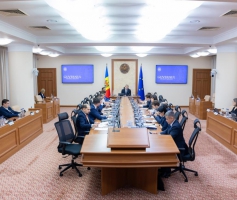
I have repeatedly expressed my views publicly on the development of agriculture. Therefore, when the new Government’s program was published, I focused my analysis on the agriculture section. Below are several specific provisions that particularly caught my attention.
First of all, I noted the provisions concerning subsidies and, more broadly, state support for the agricultural sector. The new Government aims to introduce a predictable, transparent, and multiannual subsidy system based on clear eligibility and performance criteria. The program also provides for a reform of subsidized agricultural insurance and the introduction of multi-risk insurance products. Another priority will be encouraging preventive investments in irrigation, water collection and storage, as well as resilient technologies and crop varieties. Progress in these areas has long become a necessity, just as it has become essential to review the overall approach to agricultural subsidies and investment incentives. If the Government succeeds in implementing these objectives, they will undoubtedly have a positive impact on the development of agriculture.
The Government’s objective of redirecting and prioritizing public support for agricultural development also deserves attention. In particular, it plans to gradually reduce ad hoc budget interventions aimed at compensating losses and instead channel resources toward prevention, insurance, irrigation, resilient technologies, and predictable risk-sharing mechanisms. This is an important step, as significant public resources are currently being spent without producing a meaningful impact on the sector’s development.
The Government’s program also indicates that special attention will be given to critical issues such as climate change, soil conservation, and strict adherence to environmental objectives. Specifically, the Executive intends to align agricultural policies with environmental, climate, and rural development goals; promote agricultural technologies adapted to drought conditions, efficient water use, and soil conservation; and integrate climate risks into the design of subsidies, credit schemes, and investment projects. More broadly, the Government plans to establish a National Agricultural Risk Management System, ensuring that responses to natural disasters are based on prevention, insurance, risk-sharing, and predictable budgetary mechanisms. This represents a new approach and, frankly, one that has become increasingly necessary given the recurring challenges faced by the agricultural sector.
Another noteworthy aspect of the Government’s program concerns the protection of domestic producers, particularly measures aimed at ensuring fairer market positions through shorter supply chains, greater cooperation, and more effective enforcement of rules against unfair commercial practices. The program also seeks to strengthen producers’ bargaining power in relation to intermediaries and retail chains. It must be acknowledged that local agricultural producers currently receive very limited protection and often struggle to compete under unfair market conditions. Should the Government take concrete action in these areas, local producers are likely to experience significant benefits.
Finally, particular attention should be paid to the provisions concerning the preparation of local producers for alignment with European Union standards. The Government’s vision is that the transposition of the EU acquis will be accompanied by transition periods, early information campaigns, public consultations, and financial instruments to support compliance-related investments. This approach is fully in line with the expectations of agricultural producers, who seek sufficient information and adequate time to adapt to the transition and meet its requirements.
In conclusion, the new Government’s program, at least regarding agriculture, appears well-conceived overall. The real challenge, however, will be the successful implementation of these commitments.
Oleg Țurcan, businessman, investor, and philanthropist
 Loading ...