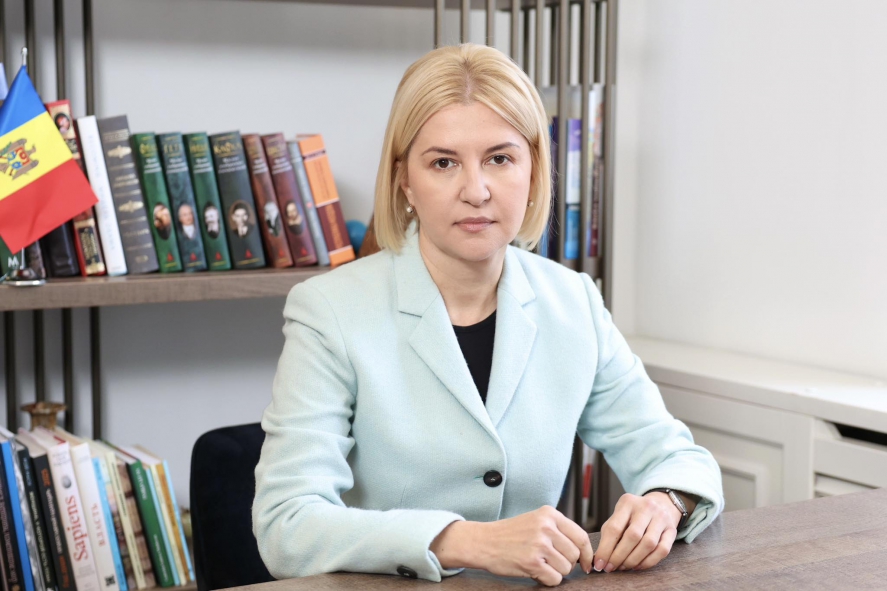
The Republican Party “Heart of Moldova” was abusively excluded from the September 2025 parliamentary elections, and its activity has been just as abusively and illegally restricted for more than five months. All these abuses were carried out on the basis of legislative changes introduced by PAS only a few months before the parliamentary elections. The statements were made by Irina Vlah, the party’s leader, following the Venice Commission’s opinion.
“We have always said that PAS’s actions against the Republican Party ‘Heart of Moldova’ were clear abuses, and now the Venice Commission’s opinion confirms this. The Commission established that the preventive limitation of a party’s activity cannot be based on mere suspicions or political statements. This is exactly what happened in the case of the Republican Party ‘Heart of Moldova’. The Venice Commission explicitly indicated that there must be credible and sufficiently solid evidence; the court must verify concrete facts, not just abstract risks; it must be demonstrated that the party’s activity poses a real and sufficiently serious danger to democracy or the constitutional order. All these principles were trampled on in our case,” Vlah said.
She believes the Venice Commission clearly indicated that, before restricting a party’s activity, the court must examine whether less restrictive alternatives exist—for example: financial sanctions, sanctioning the individuals responsible, limiting specific activities (such as illegal financing), or supervision and control measures.
“If these measures can solve the problem, then suspending or restricting a party’s activity is not justified. In our case, no alternatives were considered—the instruction was clear: the Republican Party ‘Heart of Moldova’ had to be excluded from the elections and kept as far away from politics as possible by limiting its activity. I will not go through all the points reflected in the Venice Commission’s opinion. I will only mention that the verdict is extremely harsh—the PAS government, through abusive legislative amendments, restricted freedom of expression, endangered press freedom, granted excessive powers to repressive bodies, and more. And all of this was done to eliminate political opponents,” Vlah added.
The politician wonders whether the law will now be annulled.
“Now that the truth has come out, will PAS have the courage to annul its own abusive law? Or perhaps the Constitutional Court, in light of the Venice Commission’s opinion, will declare this law unconstitutional. We don’t know what PAS leaders are thinking or how they will proceed, but one thing is certain: they have once again embarrassed the Republic of Moldova internationally and have shown that behind their beautiful statements about democracy and European integration lie dictatorial tendencies,” Vlah concluded.


 Loading ...