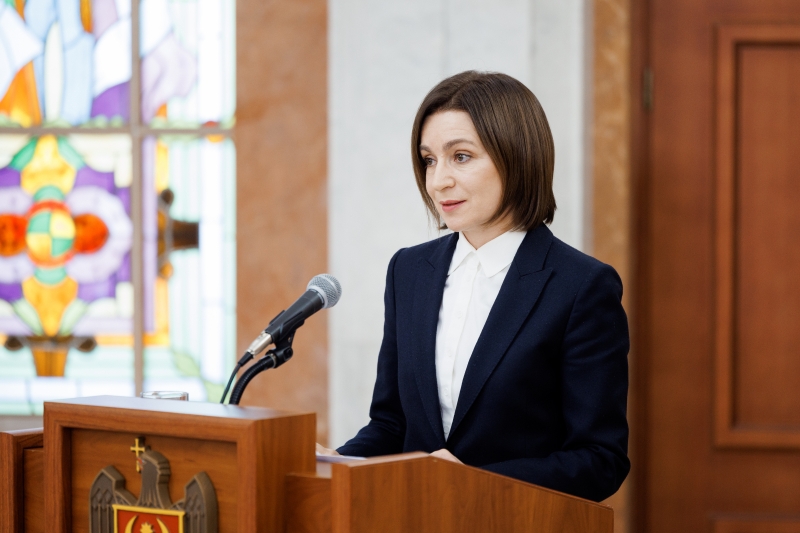
“In recent years, we have significantly increased the defense budget from 0.38% of GDP (884 million lei) in 2021 to 0.58% (1.9 billion lei or 100 million euros) in 2025. However, these resources are small compared to our needs and compared to the budgets of other states. I know that discussions often refer to neutral countries, and here I want to give you some examples. If the annual budget of the Republic of Moldova today is just over 100 million euros, in Austria — a neutral state — the budget is 5 billion euros, and in Switzerland it is nearly 10 billion dollars. It is important that we set the goal of reaching 1% of GDP in defense spending; until then, we compensate through resources provided by our partners. And these resources are important.”
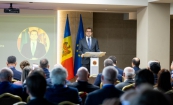
The statements were made by President Maia Sandu during the annual opening‑of‑the‑year press conference, TRIBUNA reports.
The head of state emphasized that “a modern, capable, well‑equipped army is fundamental for our development, peace, and freedom.”
“I know there are many irresponsible politicians who constantly try to speculate and stir fear around this topic. I want to remind them that we have a very clear constitutional provision stating that the defense of the Homeland is a sacred right and duty of every citizen. And it is our responsibility to do everything necessary to ensure our country’s security,” the president noted.
Maia Sandu also said: “In the last four years, we have benefited from support from the European Union. This support amounts to approximately 190 million euros; we have also received support from NATO — 41 million euros — and bilateral assistance from several states. The partners who have supported us the most in this sector are Germany, the United States, Romania, Poland, and others whose help we greatly appreciate. I want to underline that this non‑reimbursable assistance is a sign of trust, earned through transparency, integrity, and seriousness. These resources show that we are not alone and that our security matters to Europe. And when we talk about the resources we invest in defense, we must understand that these are not expenses — they are investments in the country’s peace and development.”
The president also recalled that the National Defense Strategy has been approved. The regulatory framework for ensuring airspace control has been updated. The structure of the National Army has been reorganized. New subdivisions have been created, such as units for electronic warfare, cyber defense, and strategic communication. Anti‑air defense systems, anti‑drone systems, and other equipment have been acquired.
For 2026, Maia Sandu announced the following priorities for the defense sector:
“- First, for full monitoring of the airspace, having one modern radar is not enough — we need several. In 2026 we will receive another radar purchased through EU non‑reimbursable assistance.
- We will continue to invest in air‑defense capabilities, especially to counter drones that enter our airspace illegally. These drones threaten our homes, our economy, and our peace of mind.
- We will continue to invest in modernizing infrastructure to provide the best service conditions for our defenders.
- We will continue the processes of aligning with Western standards across the entire military spectrum.
- And we will develop new partnerships with countries that promote peace.”

 Loading ...