Moldova obtained candidate country status for EU membership in June 2022, thus becoming part of the European Union’s (EU) annual enlargement package. This significant step provides Moldova with a historic opportunity to align with European standards, supported by the annual assessments of the European Commission (EC). The Commission issues a comprehensive report that monitors two fundamental aspects: overall readiness for accession and the country’s annual progress. The report covers annual progress and is based on contributions from various sources, including contributions from the Government of Moldova, EU member states, reports from the European Parliament, and information from various international and national non-governmental organizations.
In this context, state institutions are fully involved in supporting the country’s European path in their areas of responsibility, with activities coordinated according to Government Decision No. 180/2024 regarding the coordination mechanism for Moldova’s accession process to the European Union and the organization and functioning of the negotiation team within this process.
The Role of the CoARM in Promoting European Integration Reform
The Court of Accounts of the Republic of Moldova (CoARM) is an important actor in this process, with related activities for the country’s European integration being one of the major priorities on the agenda of the Supreme Audit Institution. Representatives of the Court of Accounts are members of three working groups included in Cluster 1 “Fundamental Values”: the working group responsible for public administration reform, which is part of the working groups responsible for political criteria; Working Group 32 “Financial Control” and Working Group 18 “Statistics”, which are part of the negotiation chapters working groups. Additionally, representatives of the Court participate in the activities of Working Groups on negotiation chapters 33 “Financial and Budgetary Provisions” and 22 “Regional Policy and Coordination of Structural Instruments”.
The CoARM’s contribution to the European accession process in 2024 has primarily focused on initiating bilateral screening procedures with the European Commission on negotiation chapter 32 “Financial Control” and the public administration reform criteria.
It is noted that negotiation chapter 32 includes Section II External Audit, which directly falls under the responsibility of the Court of Accounts.
Regarding Chapter 32, the EU promotes the reform of national governance systems to enhance managerial accountability, effective financial management of revenues and expenditures, and external auditing of public funds. Financial control rules must continue to protect the EU’s financial interests against fraud in the management of EU funds and euro currency counterfeiting.
For Moldova, EU membership means more than meeting certain criteria; it is an opportunity to strengthen public institutions, enhance transparency, and promote sustainable development. With a well-defined coordination framework and active involvement of national institutions such as the Court of Accounts, Moldova is gradually building its path towards full European integration.
Progress in Financial Control and Public Administration Reform
According to the European Commission’s report on Moldova for 2023, Moldova is at an early stage of preparation for financial control. Some progress has been made during the reporting period, particularly the adoption and beginning of implementation of the new public financial management development strategy for 2023-2030. Resources dedicated to internal public financial control should be strengthened. Attracting and retaining qualified internal auditors remains a challenge. The Supreme Audit Institution has improved its strategic framework based on international recommendations, and the efficiency of parliamentary oversight of public funds management needs to be enhanced.
The report mentions that regarding the constitutional and legal framework, the Court of Accounts is included in the Constitution, and the applicable law is fairly well developed. However, some provisions of the law undermine key aspects of the organizational, functional, and financial independence of the Court. The term of the president is relatively short, and the duration of the mandate should be analyzed to increase the Court’s independence. Regarding institutional capacity, the Court has a broad mandate to audit all public bodies and resources. Parliament can ask the Court to perform other tasks, which limits the Court’s control over its own resources and work program. The Court has a new development strategy, accompanied by annual action plans based on a EU-funded “peer review” assessment, but lacks administrative capacity.
National Plans for Improving External Public Audit
Following the European Commission’s recommendations, Moldova has developed the National Action Plan for EU accession (2024-2027) and a plan dedicated to implementing the recommendations from the SIGMA monitoring report “Moldova’s Performance in Public Administration in Relation to Public Administration Principles”. The actions include, among others:
- strengthening the organizational and financial independence of the Court of Accounts;
- developing professional capacities through certification and ongoing training of auditors;
- optimizing the Automated Information System “Audit CCRM” for monitoring the implementation of audit recommendations;
- developing the Information System for automating the audit process.
All these actions aim to ensure the quality and impact of the Court of Accounts’ activities. Subsequently, they will support the transformation of the CoARM into an institution aligned with European standards, capable of ensuring integrity and efficiency in the management of public resources in Moldova.
Bilateral Screening and Collaboration with the European Commission
During the bilateral screening meeting held on October 14, on Chapter 32 “Financial Control”, representatives of the CoARM had the opportunity to present, in Brussels, the progress and future plans of Moldova in the area of external public audit. The discussions focused on the measures taken and the current objectives of the Court of Accounts, highlighting Moldova’s ongoing efforts to align with European standards and requirements.
The Crucial Role of Public Administration Reform
Another important area for European integration is public administration reform, and the EC report for 2023 recognizes some progress in this regard. Moldova recently approved a public administration reform strategy for the period 2023-2030 and an implementation program for 2023-2026. In this context, the EC recommends adopting the regulatory framework for territorial reform through voluntary mergers, completing salary reform plans and starting their implementation, as well as implementing the new public financial management strategy.
CoARM representatives participated in discussions on achievements, challenges, and future plans in the field of public administration reform during the bilateral screening meeting with the European Commission held on September 26 in Brussels. After the round of discussions, state institutions are in the process of developing a roadmap that outlines the key actions to be implemented in the context of the EC recommendations on public administration reform.
Continuous Commitment to Good Governance
The Court of Accounts, together with other state authorities, will continue to make the necessary efforts to promote Moldova’s accession process in its area of responsibility. Through the continuous and consistent implementation of strategic objectives and recommendations from international evaluators and the European Commission, as well as by conducting activities in accordance with international standards and best practices, the Court of Accounts will continue to contribute to the strengthening of sustainable external public audit in Moldova. The impact of such an approach plays an essential role in ensuring good governance and promoting the principles of performance and legality in the public sector.
Moldova’s progress on its path to EU membership reflects the strong commitment of the authorities to good governance and the efficiency of financial control. By strengthening institutional capacities and implementing necessary reforms, Moldova is approaching the fulfillment of European criteria, transforming current challenges into real opportunities for development and stability.
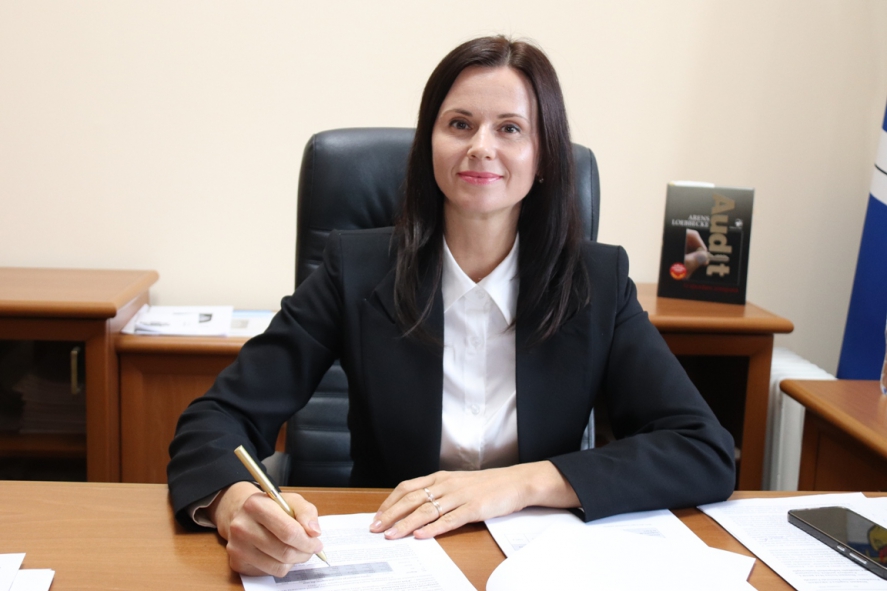
Tatiana Șevciuc, the president of the Court of Accounts of the Republic of Moldova

 Loading ...