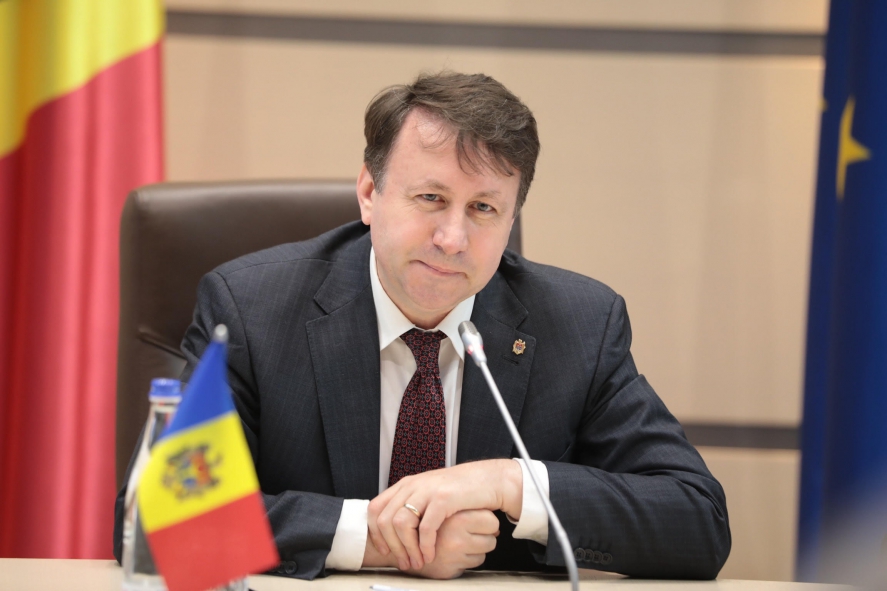
Ahead of Independence Day, TRIBUNA is publishing a series of materials under the heading “35 Years of Independence.” Igor Munteanu, a political science and governance researcher, former MP and ambassador, accepted our invitation and shared the following reflections:
The Republic of Moldova at 35
I would describe it as a state that gained independence before it was ready for it. In 1991, almost overnight, we adopted the symbols of a virtual state — a flag, borders, a government, an elected president, and a seat at the United Nations General Assembly in New York. What we lacked, however, was the hardest thing to acquire: a state capable of turning declared sovereignty into a shield of laws protecting its citizens.
This is where the main paradox of this 35th anniversary lies: the Republic of Moldova was independent even when it could not make decisions on its own; democratic and united during certain historical episodes that remain in our collective memory as fully formed national symbols, yet these were too often followed by shameful betrayals, astonishing post-Soviet inertia, and Soviet habits even within the administration we had left to its own devices.
Many governments have changed in Chișinău since 1991, along with all kinds of doctrines and alliances, while the “Phanariot gangs” — groups that discredited the state as an institution by saying one thing and doing something completely different — remained remarkably constant.
At first, we improvised a new state on the skeleton of the Soviet system and the trauma of an unjust war launched by the troops of the 14th Army in 1991–1992. This was followed by the “agrarian-socialist” counterreaction and several makeshift governments, until the 1998 crisis and the return of the Party of Communists of the Republic of Moldova (PCRM) to power in 2001, with the fixed idea of a “vertical of power” modeled on Russia. People protested until they sent the Voronin regime into retirement.
After 2009–2010, integration with the EU became the central goal of the governments led by the Alliance for European Integration (AIE). Yet, under the banner of Europeanization, petty and extremely cynical groups once again captured the state and used it for their own interests.
The 2014 banking fraud was not merely the theft of one billion dollars. It was the moment when citizens discovered how much a state that exists only on paper can cost when it refuses to honor its obligations. People took to the streets and protested until they achieved a change of power. Not for long.
Since 2021, the European idea has once again been raised on the banner of a single ruling party, but here too the local context brings its own paradox: Moldova knows better where it wants to go than how to get there. Ambition races ahead in celebratory speeches while the administration follows behind, gasping for breath.
And here I must acknowledge that our main weakness has never been poverty. A poor country can get back on its feet. It is much harder for a country where loyalty to the boss is valued more than competence, and where every government condemns the clientelism of its predecessor only to practice it even more aggressively in the name of remaining in power.
At 35, the Republic of Moldova resembles an adult who has reached maturity but still lives with his parents, lives on credit, and hopes to move into his own home without knowing when. The tragedy of this anniversary is tied to the people we have lost to emigration — those who never managed to see Moldovans living happily at home.
It can be seen in the astronomical gap between living standards in the Republic of Moldova and those of the countries with which we would like to compare ourselves, as well as in how dependent we remain on the goodwill of others at this critical moment.
The Republic of Moldova has survived — and that is not insignificant. But, to paraphrase an American saying, survival is not a strategy; it is merely a postponement of payment. The question is no longer whether this state will survive, but whether we will allow it to continue pretending to function chaotically and in the interests of certain privileged castes, or whether we will finally do things properly so that it actually works.
The greatest achievements of these years
I would name three, and none is an event — they are all structural changes.
First: the survival of the state without collapse and without a generalized civil war. This may seem insignificant to someone who does not compare the Republic of Moldova with other post-Soviet states. We went through the consequences of the 1991–1992 war, decided by Russia and its military-industrial clientele in Tiraspol; the economic collapse and painful adaptations associated with the reforms launched between 1994 and 1998; the costs of the 2009 financial crisis and the 2013–2014 banking fraud — without losing institutional continuity and without sliding into interethnic conflict or mass violence.
That is not insignificant if we compare ourselves with Georgia, which went through three wars of aggression and lost 20% of its territory. And compared with Ukraine, we are not doing worse at this moment, although it is almost impossible to predict how that war will end.
Second: energy independence. Moving from dependence on a single supplier toward genuine interconnection with the EU market — and with Romania — is probably the most substantial recovery of sovereignty achieved in the past 35 years. For a long time, we discussed independence in symbolic terms, while in reality it was being decided at a compressor station.
Third: European institutional anchoring. Here, finally, we have a timetable and instruments capable of providing verifiable indicators: candidate status for EU membership recognized in 2022, the formal opening of negotiations in 2024, completion of the screening process in 2025, the opening of Cluster 1, “Fundamentals,” on June 15, 2026, and Cluster 6 on July 14, 2026. This shows that the EU accession process is no longer merely an aspiration but a process with dated obligations.
I would add one essential clarification for an anniversary interview: these achievements cannot be credited solely to one political party. They are an alloy of pressure from society, the work and remittances of the diaspora, persistence from external partners and, ultimately, the hard work of governments that have served the national interest.
Could things have been better? Could they have been worse? Certainly. But we cannot turn back time.
The greatest challenges. What divides society
Demography is currently an existential problem for the Republic of Moldova. We are administering a state designed for a population that we no longer have. All public policies — pensions, schools, hospitals, defense, absorption of funds — are calibrated to a nonexistent demographic reality: an aging population and an administration burdened by numerous inhibitions and shortcomings.
The second huge challenge is the quality of the state, and here we need to call things by their proper names. The systematic promotion of incompetence in public administration and the replacement of professional qualities with partisan loyalty are not simply flaws in political ethics; they appear to constitute a public policy characteristic of PAS governance.
Never before has this hemorrhage of competent people poisoned public accountability mechanisms to such an extent. Because of the clientelist control exercised over the media for years, little was said about formal competitions with predetermined outcomes, “temporary status” directors appointed politically, boards of directors functioning as extended “pockets” of the ruling party, or selection criteria drafted to fit the person chosen in the name of PAS.
The costs are enormous. The state administration has ceased to represent the public interest and has placed itself in the service of the corporate interests of a single party. As a result, we have institutions stripped of competence and public oversight, European funds that are extremely difficult to absorb, foreign investments leaving the economy and tenders challenged in court, and institutions that cannot draft a justification note without external consultancy that is excessively influential for its temporary and limited role.
The MoldATSA episode, which preceded Prime Minister Alexandru Munteanu’s resignation after only eight months in office, should not be viewed merely as a scandal but as a symptom of an anti-democratic system. A strategic enterprise, a director whose CV data were publicly challenged, and hiring decisions raising questions of family connections — these are not isolated accidents.
Three governments in less than two years and a cabinet invested on July 21, 2026, with 53 votes demonstrate the scale of a political crisis that tramples on the fundamental laws of the state in the name of preserving power.
What divides society? I would reformulate the question. I do not believe we should mechanically repeat the propaganda narrative that social divisions run along an “East–West” line, especially between those who have access to the benefits of modern civilization and those excluded from it.
There is a connected, predominantly urban Moldova with access to the European market, digitalization and mobility, and a Moldova of the “losers”: a rural, aging space with extremely low incomes, below the minimum subsistence basket.
The “geopolitical” divide is, to a large extent, the language in which social and territorial frustration is expressed. On top of it lies a cultural divide — people living in completely separate media, linguistic and identity ecosystems, including in Gagauzia and on the left bank of the Dniester, but also in certain regions such as Taraclia, Bălți, Edineț and Ocnița.
But these are effects, not causes. The cause is the unequal distribution of the costs of transition and a state captured by groups that reject competence for reasons of preserving power and avoiding healthy competition.
The Republic of Moldova in 10 years
I am not making prophecies. Instead, I propose three scenarios and one variable that will determine them.
The factual reference point is the political timetable adopted by the current Government: completing negotiations and preparing to sign the EU Accession Treaty by the end of 2028. With the necessary ratifications, formal accession could plausibly take place in the early 2030s — within the time horizon of this question.
This projection depends not only on Chisinau’s announced intentions, but on a multitude of political, geopolitical and contextual calculations, including critical elections in the six states that see themselves as the primary driving force behind a politically recalibrated EU.
Scenario one — a member state or a country in the ratification process, with the fundamentals internalized. Here, the EU would expect not merely formally transposed legislation from Moldova, but institutions that apply the rules even when nobody is watching. No external excuse will help.
Scenario two — the “eternal candidate.” Impeccable technical alignment on paper, hollow institutions, enlargement fatigue in Brussels, and declining interest in the “diligent student” image that Chisinau sometimes projects. This is the most likely scenario if accession is treated as an exercise in ticking off chapters.
Scenario three — regional destabilization, driven by the unpredictable evolution of the war in Ukraine and the security architecture that emerges from it.
The variable determining which scenario becomes our future does not lie solely in Brussels. It lies in our administrative capacity and in how we select the people who run the state — in the arrogance with which “the chosen ones” consume oysters during the vote on a new government, and in the corruption and influence-peddling schemes that erode any legitimacy previously earned.
Accession will no longer be secured with “blank checks” from Macron, Scholz or Nicușors. It will be earned on the construction sites of the real economy, in the municipalities amalgamated by PAS, and in ministries where someone must correctly draft tender specifications for public procurement.
If we do not reprofessionalize the public service over the next three years, through competitive recruitment and adequate salaries that give public service professional prestige and authority beyond electoral cycles, no EU accession scenario will be feasible.
And one observation we tend to avoid: accession will force a decision regarding the population on the left bank of the Dniester, which has lived for the past 35 years under the terror of an occupying regime. We have postponed for 35 years a state policy reflecting the Republic of Moldova’s obligations toward these citizens, while offering benefits and an audience to separatist leaders — like the joke about “feeding the crocodiles in the hope that you will be eaten last.”
Most likely, we will be able to join the EU with an arrangement involving differentiated application of EU obligations (the acquis communautaire), rather than with the problem already resolved. Or perhaps not, if unexpected developments occur on the Russian-Ukrainian battlefield.
Nevertheless, it is wiser to prepare for several scenarios than to discover them during the final year of negotiations.
Three to five things I am proud of
Certainly, the Republic of Moldova is a state where governments have repeatedly changed through elections. Never through coups. Sometimes through the overthrow of governments that had captured the state. In the post-Soviet space, such models of transition are exceptional rather than the rule, and this is certainly one of our most underestimated collective achievements.
The Republic of Moldova is the second Romanian state. We have managed to preserve what the Soviet regime systematically tried to eliminate — from banning the alphabet and the name of the language to introducing an administration loyal to the imperial center and Russian interests.
We still need to take the necessary steps for Romania to become more than a friendly neighbor in a project of integrated common spaces and reunification, to which more than 40% of the citizens of the Republic of Moldova are willing to contribute in solidarity.
Moldova has a population with an exceptionally high degree of global mobility. We can say that we are a transnational nation. The diaspora is not purely a loss; it is the second lung of this economy and, increasingly, the channel through which expertise, capital and standards enter the country.
Moldova is a European laboratory of resilience. Very few societies of this size have been subjected to such intense informational and electoral pressure and managed to withstand it. Our experience is now being studied in much larger capitals.
Moldova has exceptional agricultural potential, though it remains insufficiently exploited. Agricultural production relative to the country’s limited territory, as well as exceptional products — wine, black soil, the Cricova and Mileștii Mici cellars, competitive advantages in IT and the adaptability of its people — are excellent assets, not merely tourist attractions but evidence of historical continuity.
These advantages must become the key to our competitiveness on a rapidly and profoundly changing European market.
A message on the 35th anniversary of Independence
Roger Brubaker said that the nation is a referendum held every day. In the same way, celebrating independence is not simply a date on the calendar, but an opportunity to respond to the agenda of the citizens of this state.
A state is independent to the extent that it can produce, innovate, administer justice and defend itself against the adversities of history — the rest is ceremony.
And a state deserves its independence to the extent that it chooses its statesmen based on what they know how to do, not on whom they are loyal to.
This should be the anniversary commitment marking 35 years: not another opportunity for political PR, but a fair competition, a competent civil servant retained in office, and promotion based on merit.
This state must respect all its people without exception and rein in its elites, who too often confuse themselves with the state.
Thirty-five is the age at which a state can no longer invoke youth as an excuse.
Happy 35th anniversary, Republic of Moldova!




 Loading ...