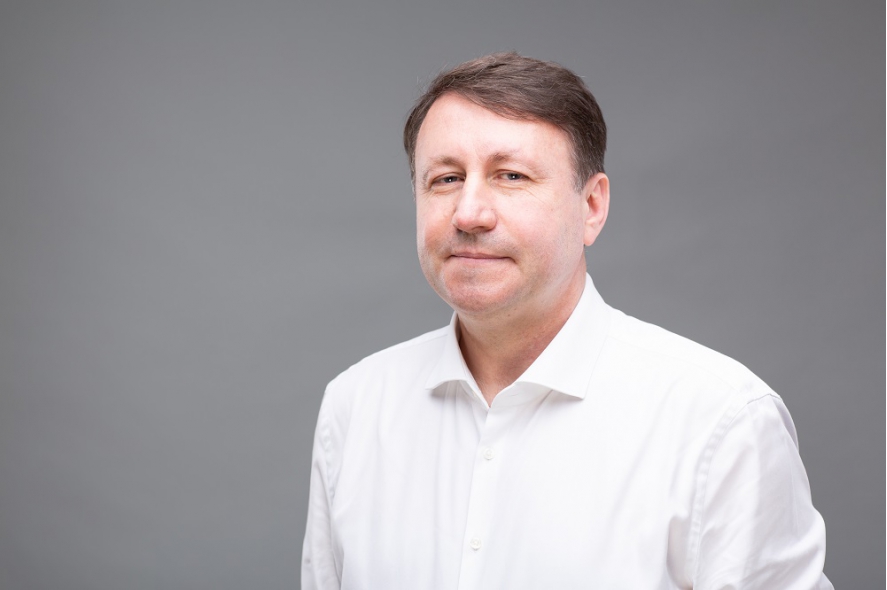
Igor Munteanu, geopolitical expert, states that “tomorrow, on 24 February, we mark four years since the outbreak of the war in Ukraine. A conflict that was supposed to last only a few days has turned into a war that has mutilated more than 2 million people. Military statistics indicate approximately 1.2 million dead and wounded on the Russian side and around 600,000 on the Ukrainian side. These are apocalyptic losses that Europe has not seen since 1945. Russia’s military aggression was never a simple ‘special operation’, as the Kremlin called it, but a war of genocide and economic and military suffocation”, TRIBUNA reports.
According to him, for Putin, the stake of this aggression was never Donbas. Nor Crimea. His objective was the dismantling of the post‑1989 security architecture built on peace, safety and prosperity. If force can redraw borders, then the entire security order becomes negotiable.
“Strategic reality is more cynical. After four years, Russia controls only 20% of Ukraine, despite claiming it would conquer the country in 48 hours. Russia loses between 20,000 and 30,000 soldiers every month on its Ukrainian front. The war consumes 8% of Russia’s GDP and 40% of its federal budget, while a permanent war economy erodes structural competitiveness, drains funding from education and civilian infrastructure, reduces private investment and maintains technological stagnation in non‑military sectors. Russia has entered a relationship of systemic vassalage with China, its main external partner (≈30–35% of its foreign trade), the main buyer of Russian oil and the main supplier of industrial and electronic goods. And vassalage to China carries a strategic price.”
Meanwhile, Ukraine continues to resist, at enormous cost: more than 2,200 civilians killed and 12,000 injured in 2025 alone; over 10 million Ukrainians forced to flee bombardments and invasion, leaving behind death and ruins. Reconstruction costs after the war are estimated between 600 billion and 1.5 trillion dollars. An entire country lives between the front line, exile and rolling blackouts.
“This is the cruel geometry of war: hundreds of thousands of lives for a few percent of territory.”
And yet, after four years of agony and militaristic exaltation, the conclusion remains uncomfortable for the aggressor state. Russia does not have the military means to achieve its macro‑objective — subordinating Ukraine as a state or destroying Ukrainians as an ethnic group. Ukraine does not have, on its own, the resources for a rapid victory that would cut off the aggressor’s appetite for future destruction. The fragile balance is upheld by the will of its defenders and the West’s capacity to protect them,” he wrote in a Facebook commentary.
Igor Munteanu also noted that the West has supported Ukraine for four long and exhausting years to prevent its collapse. A massive effort — but not enough to end the war. The West’s strategy has been more about risk management than decisive resolution, avoiding direct confrontation with the source of aggression. “I fear there is no safer alternative when dealing with a nuclear power (Russia holds 1.97% of global GDP and 45–50% of the world’s nuclear warheads — 5,400 out of roughly 12,000),” he added.
The expert further stated that “the lesson for those watching from afar is simple and harsh: the international order does not collapse suddenly — it erodes through tolerated precedents. If aggression produces gains — even small or partial — for an aggressor who faces no consequences, it becomes a model to follow. This is the grim picture painted by the lessons of Russian aggression in Ukraine.”
“The war is not only about Ukraine, and it will never be recorded in history as a strictly regional conflict. It is a test of the boundary between good and evil, between imperial ambition and the real capacity to sustain it. A test of the will of those who claim to defend rules, not just interests.
Somber reflections on the commemoration of four years of bloody war in Ukraine”, the opinion leader concluded.


 Loading ...