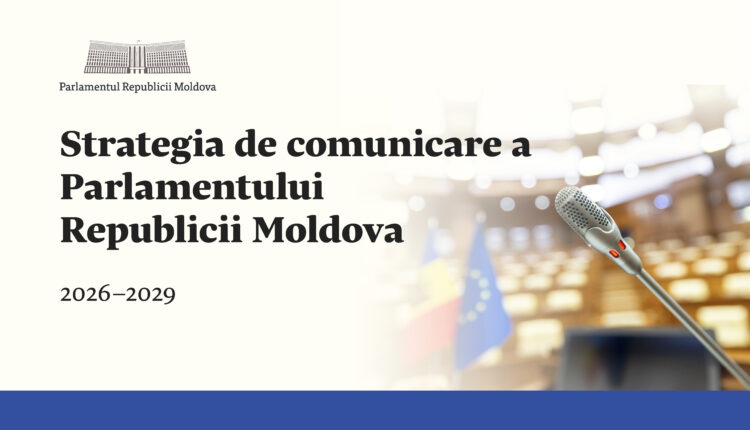
The Standing Bureau has approved the Parliament’s Communication Strategy for 2026–2029, which will guide the institution’s public communication activities over the next four years. The document sets out the communication priorities and objectives, as well as the mechanisms for planning, coordinating, and evaluating public communication, TRIBUNA reports.
The Strategy aims to further increase the transparency of the Parliament and public access to information of public interest, to improve public understanding of the legislative process, and to encourage more active dialogue between Parliament and society. It provides a unified vision for institutional communication, with objectives such as strengthening Parliament’s role as an open, citizen‑oriented institution, increasing public trust through clear and accessible information, and enhancing the institution’s ability to respond effectively to crises and disinformation.
The Strategy is built around four priority areas: active transparency and clear information for citizens; communication on the European integration process and on the legislation adopted by Parliament; public engagement and the development of participatory civic education; and strengthening institutional communication capacities and resilience to disinformation. The document emphasizes explaining the EU integration process and the benefits of reforms for citizens, promoting public participation in the legislative process, and developing effective mechanisms to counter disinformation. It also provides for modernizing digital communication channels, producing accessible explanatory materials, expanding civic education programs for young people, and strengthening dialogue with the diaspora, civil society, academia, and the media.
The Strategy regulates only the institutional communication of Parliament and does not replace the political communication of parliamentary factions or individual MPs, carried out in their own name or on behalf of political parties. Institutional communication will be guided by principles such as neutrality, accuracy, balance, accessibility, proactivity, and continuous interaction with target audiences.
Implementation of the Strategy will be monitored through periodic evaluation tools, including annual reports and communication audits, allowing adjustments based on developments in the information environment and public needs.
The Communication Strategy for 2026–2029 was developed based on the assessment of results from the 2020–2024 Communication Strategy and following consultations with MPs and parliamentary staff. The document was drafted within the “Eastern Partnership Regional Project – Public Administration Reform III”, implemented by GIZ and funded by the German Federal Ministry for Economic Cooperation and Development (BMZ), with support from the Twinning project “Strengthening the capacity of the Parliament of the Republic of Moldova and its role in the EU accession process”, funded by the European Union and implemented by a consortium led by the Hellenic Parliament, together with the parliamentary administrations of Romania (Chamber of Deputies and Senate), Italy (Chamber of Deputies), Hungary (National Assembly), and Austria (Parliament). Implementation of the Strategy will be supported by the “Strengthening Parliamentary Democracy in Moldova” (PADEM) Project, funded by Switzerland and implemented by DAI Global.






 Loading ...