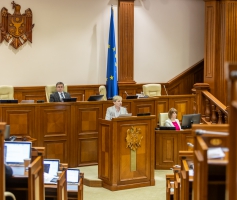
The media sector will be regulated by a new law aligned with European standards. MPs approved the draft Law on Media yesterday in its first reading.
The draft aims to establish a coherent legal framework that balances freedom of expression, editorial responsibility, and the protection of media pluralism, in line with European standards and recent developments in the media market. It defines key concepts such as media pluralism, editorial responsibility, media service provider, and media market concentration, and sets out the general legal regime applicable to media service providers, including their rights and obligations.
The draft introduces the Register of Media Service Providers, to be managed by the Ministry of Culture. Registration will be voluntary and will not be a prerequisite for carrying out media activities. The register will ensure administrative record‑keeping and facilitate public access to information on ownership structures and the main sources of financing of media institutions.
Other provisions focus on protecting journalistic activity and strengthening guarantees of editorial independence, through measures designed to prevent unjustified interference and ensure the free exercise of the journalistic profession. The draft also establishes criteria for assessing concentrations on the media services market, including their impact on media pluralism and editorial independence.
The document also aims to bring national legislation closer to EU standards set out in Regulation (EU) 2024/1083, which establishes a common framework for media services within the internal market (European Media Freedom Act).
According to the explanatory note, the new law seeks to ensure a transparent, fair, and democratic functioning of the media market in the Republic of Moldova and to strengthen the information resilience of society.
The draft was developed by a group of MPs within the parliamentary Committee on Culture, Education, Research, Youth, Sport and Media, with the participation of members of the Civil Society Media Experts Council, as well as representatives of the Ministry of Culture and the Audiovisual Council. The document was consulted with the Venice Commission, and its recommendations were incorporated into the text. The initiative will be submitted to Parliament for examination in the second reading.
The new law will enter into force six months after its publication in the Official Gazette. Upon its application, the 1994 Press Law will be repealed.




 Loading ...