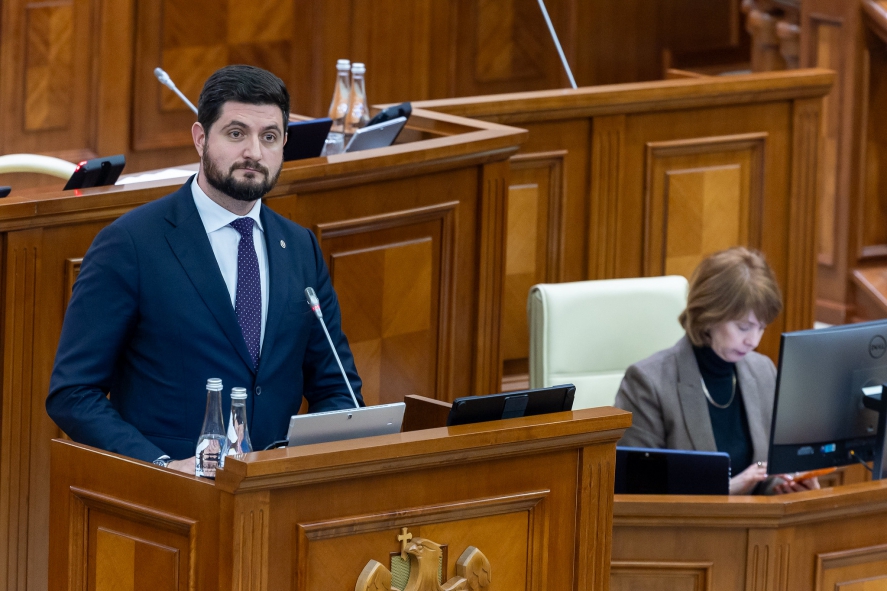
Parliament has rejected the motion concerning the state’s energy policy and energy security, particularly in relation to the need to protect consumers and ensure tariff stability, TRIBUNA reports.
The simple motion was submitted by a group of MPs from the “Our Party”, “Alternativa”, and “Democrația Acasă” factions. The authors cited high energy tariffs and the vulnerability of the electricity system. They requested the presentation of an anti‑crisis plan for tariff stability in 2026, a technical report on January’s power outages, and concrete measures to reduce dependence on external factors. The MPs also asked for a timeline for the full completion and commissioning of the Vulcănești–Chișinău power line.
During the debates, Minister of Energy Dorin Junghietu addressed the issue of Moldova’s energy security, which has been severely affected by Russian Federation strikes on Ukraine’s energy infrastructure. On 31 January, Moldova experienced a partial blackout. However, one day after the incident, the country managed to cover 94% of its electricity consumption from domestic sources. “This episode clearly demonstrated how important interconnections with Romania are and why we insist on strategic projects such as the Bălți–Suceava, Strășeni–Gutinaș, and, of course, Vulcănești–Chișinău power lines,” Junghietu emphasized. He also noted that construction of the Vulcănești–Chișinău line has been completed, with testing of substations now underway before the line is put into operation.
According to the minister, after many years in which the energy system was fragile, dependent, and vulnerable to political blackmail, it has now reached a stage of maturity. “The state today has tools, options, and the capacity to react quickly in crisis situations, while also implementing major investment programs in infrastructure, energy efficiency, and renewable sources,” Junghietu concluded.
After the question‑and‑answer session, the motion was put to a vote, and the majority of MPs voted against it.
Under Parliament’s Rules of Procedure, a simple motion may be initiated by at least 15 MPs and is adopted with the vote of the majority of MPs present.





 Loading ...