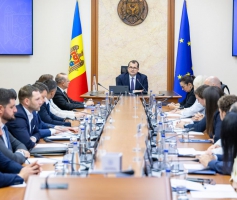
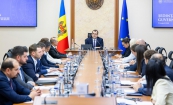
In light of the weather forecasts for 4–8 February 2026 — marked by fluctuations between positive and negative temperatures, increased risk of precipitation and ice formation — the National Crisis Management Center (CNMC) convened a coordination meeting on 3 February 2026 with the responsible institutions to prevent and manage potential risks, TRIBUNA reports.
Following the meeting, the CNMC ordered the following measures:
Traffic safety and public order
- The General Police Inspectorate (IGP) and the General Inspectorate of Carabinieri (IGC) will ensure active patrolling of national routes as soon as adverse weather conditions begin, providing support to road users. In case of blockages, they will intervene to ease traffic and provide real‑time information to the public.
- The Ministry of Internal Affairs will mobilize approximately 2,300–2,400 staff and around 650 vehicles from IGP, IGC, IGSU and the Border Police, depending on the operational situation.
Road infrastructure
- The Ministry of Infrastructure and Regional Development (MIDR) and the National Road Administration (AND) will maintain road accessibility, including by applying anti‑skid materials as weather conditions evolve.
- MIDR has mobilized 460 intervention units and 240 road workers. A total of 12,600 tonnes of anti‑skid material is available. Road conditions are monitored 24/7 through 39 territorial points and a central monitoring center at AND headquarters.
Emergency response
- The General Inspectorate for Emergency Situations (IGSU) and the National Army will provide support to local authorities in the most affected or dangerous areas, ensuring access to critical infrastructure and protecting the population.
- The Ministry of Health reports that 270 emergency medical teams are ready to operate 24/7, with continuous monitoring of vehicle condition and response capacity.
- The Ministry of Defense has mobilized 523 soldiers and 48 units of equipment, prepared to intervene at the request of local authorities.
Energy sector
- The Ministry of Energy will inform the population about electricity outages and reconnections, activate contingency plans if needed, and communicate specific recommendations.
- Energy operators have mobilized operational staff and intervention teams. The transmission system operator has deployed 58 operational employees and 15 vehicles, while distribution operators have activated up to 90 intervention teams with around 240 employees nationwide.
Education
- The Ministry of Education and Research will announce in advance any changes to the activity schedule of educational institutions, depending on the evolution of the situation.
Border and customs
- The Border Police and Customs Service will inform the public about document‑processing procedures at border crossings, including in case of information‑system disruptions.
General recommendations for citizens
- Check weather conditions and road status in advance from official sources.
- Avoid non‑essential travel, especially during icy periods (early morning and late evening).
- Wear appropriate footwear and exercise caution in public spaces.
- Stay away from trees, unstable structures or fallen power lines.
- Report emergencies to 112.
- Pay special attention to children, the elderly and persons with disabilities; support vulnerable individuals in your community.
Recommendations for drivers
- Winter tires are mandatory on icy, snowy or frozen roads.
- Reduce speed and maintain a greater safety distance.
- Avoid sudden maneuvers and unnecessary overtaking, especially on bridges, viaducts and shaded areas.
- Use low‑beam headlights at all times.
- Check vehicle condition before departure.
- If inexperienced in driving on ice, postpone night‑time or long‑distance travel.
Recommendations for pedestrians
- Walk carefully with small, steady steps on slippery surfaces.
- Keep hands out of pockets to maintain balance.
- Cross streets only at pedestrian crossings, after ensuring safety.
- Avoid running or crossing between stopped vehicles.
- Be aware that braking distances increase significantly on ice.
Recommendations regarding water bodies
- Avoid walking or standing on frozen rivers, lakes or ponds.
- Do not allow children to play on frozen surfaces.
- Avoid ice fishing or crossing frozen water bodies.
- If someone falls through the ice, do not intervene directly — call 112 immediately.
Recommendations for businesses and local authorities
- Ensure cleaning and application of anti‑skid materials in access areas (entrances, stairs, parking lots).
- Monitor local conditions continuously and be ready to implement contingency plans.
- Support vulnerable individuals and maintain communication with emergency services.
The National Crisis Management Center urges the population to follow the official pages of public authorities and responsible institutions for updated information and sector‑specific measures as the situation evolves.



 Loading ...