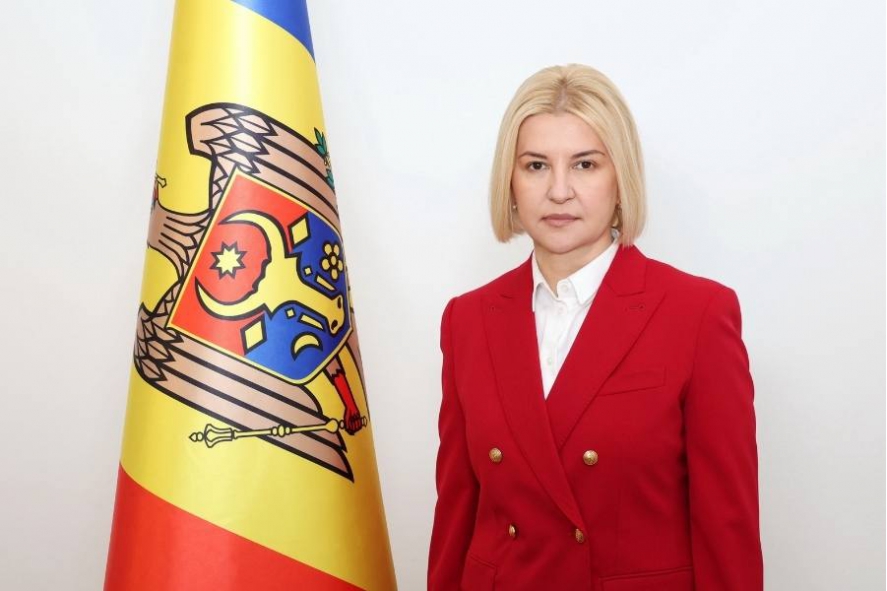
Politician Irina Vlah, leader of the Republican Party “Inima Moldovei”, states that the year 2025 has already become history, and now, with the full picture in view, we can draw important conclusions about what it meant for the Republic of Moldova. She notes that since others have spoken about the good or relatively good things, she assumed the difficult mission of addressing the less pleasant ones.
In an editorial published on her website, Irina Vlah wrote that the main event of the year was the parliamentary elections, which, according to many observers, were only partially free and fair.
“In other words, Moldova has compromised its status as a country capable of organizing democratic elections, and the rather harsh criticism and assessments issued by most international election observation missions were clear evidence of this. From the illegal and massive use of administrative resources by those in power to the abusive exclusion of electoral competitors inconvenient for the government — all of this showed how fragile Moldovan democracy is, if it still exists at all. Many years will have to pass before Moldova regains credibility and can prove that it is a country where free and fair elections are the foundation of democracy,” she stated.
Vlah also noted that in 2025, “Moldova registered several failures on the international stage. The most striking was the failure in relations with the IMF. Moldova not only missed a tranche of about 3 billion lei from this prestigious international organization, but also effectively failed the negotiations on a new memorandum. In 2025, Moldova was also the target of criticism and negative assessments from such reputable international organizations as Transparency International, the Venice Commission, PACE, OSCE/ODIHR, ENEMO, and others. And also in 2025, Moldova’s relations with the United States suffered significantly — the new White House administration mentioned our country repeatedly in a negative context.”
“Things were no better domestically. The state debt continued to grow, exceeding 130 billion lei by the end of the year; the state budget for 2026 was adopted with a record deficit — about 21 billion lei; the economy entered recession; the demographic crisis deepened, as did the level of absolute poverty, which reached 33%; the process of school closures continued; the justice reform completely failed, and so on. Thus, by the end of 2025, the Republic of Moldova had become a state in which most systems either do not function or function inefficiently,” the party leader added.
Irina Vlah emphasized that the most serious issue is that in 2025 society became more divided than ever, and politicians played a key role in this, choosing to place people on opposite sides of the barricades in pursuit of narrow party interests. Messages based on hatred, threats, blackmail, and intimidation — all of these were heavily used in 2025 and seriously affected the public mood. Some people, out of self‑preservation, chose to isolate themselves from important processes in the country, while others simply chose emigration as a way to escape Moldovan realities as if from a bad dream.
“2025 was not only a difficult year for the Republic of Moldova, but also the year in which Moldovan democracy — as well as the hope for a better life — suffered an almost fatal blow. Undoubtedly, in the years to come, researchers will provide detailed analyses and issue much stricter verdicts, but even now it is clear that 2025 was one of the darkest years in the history of the Republic of Moldova. And in this sense, it is good that it is now in the past. We must now focus on the present and the future and do everything in our power to ensure that years like 2025 never happen again. Hatred, abuses, and lawlessness must remain in the past, and we must all work together to build a truly democratic and prosperous society, as the wonderful citizens of the Republic of Moldova deserve,” Vlah wrote.
At the end, the politician added: “Some may find this editorial gloomy or pessimistic. Perhaps it is. But from another perspective, someone had to take on the ‘burden’ of such an analysis. Because if we do not call things by their name and do not establish the correct diagnosis, we will not be able to take the concrete actions needed to improve the situation in our country.”
 Loading ...