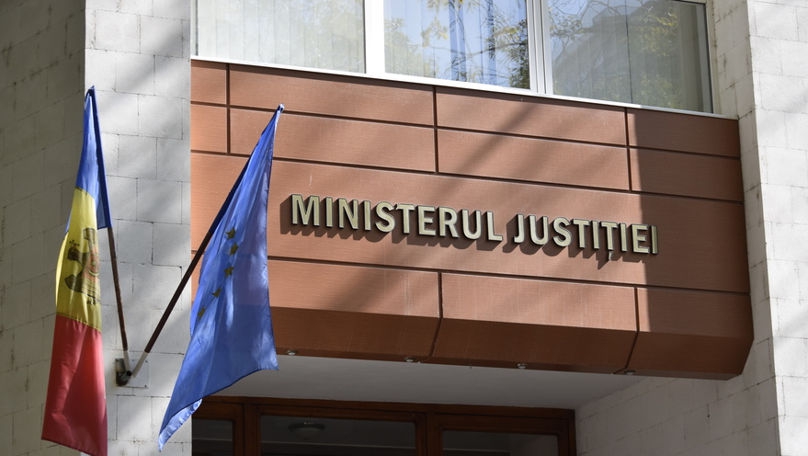
The Ministry of Justice (MoJ) emphasizes that the ruling of the European Court of Human Rights (ECtHR), issued on October 9, 2025, in the case concerning Veaceslav Platon, is based on specific actions and circumstances that occurred in 2017. The Court did not find any violations for the period after 2017 and up to 2020, when Platon was released from detention, reports TRIBUNA.
According to the ECtHR’s judgment, the case refers to insufficient medical assistance and limited family visits in two individual situations that took place in 2017.
“The findings retained by the ECtHR are a consequence of the oligarchic regime and the captured state of that period, when the justice system was subordinated to political interests. These deviations led the authorities in recent years to initiate firm measures to prevent, sanction, and remedy the situation in the penitentiary and justice systems,” the Ministry explained.
Meanwhile, in Moldova’s penitentiary institutions — including the one where Veaceslav Platon was held — essential reforms have been implemented regarding detention conditions, medical care, human rights compliance, and staff training.
“Therefore, the ECtHR’s findings do not reflect the current situation,” the Ministry added.
The institution also clarified that Veaceslav Platon had previously filed complaints with the ECtHR regarding material detention conditions, violation of the right to defense, obstacles in communicating with lawyers, and the lack of a public hearing on his pre-trial detention — all of which were rejected by the ECtHR through decisions issued on March 19, 2019, and June 4, 2024.







 Loading ...