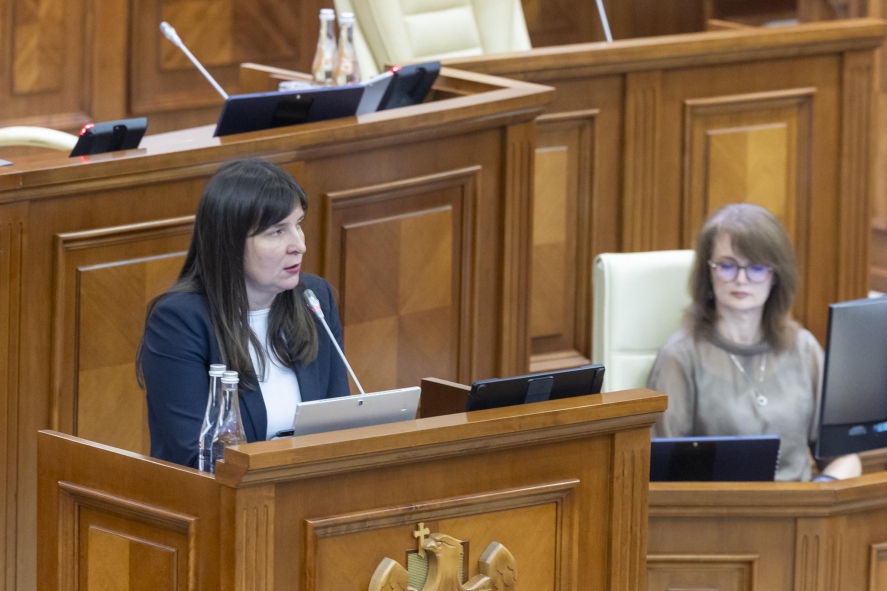
The Parliament of the Republic of Moldova has approved in the first reading a draft law aimed at simplifying tax and customs legislation. The document provides for lower taxes on labor, increased support for investments and measures to protect essential consumption, TRIBUNA reports.
The legislative initiative was drafted by the Ministry of Finance and aims to improve the mechanisms for applying tax legislation, eliminate provisions that may be subject to inconsistent interpretation, and establish a more accessible and efficient regulatory framework. The document also incorporates proposals from public authorities, the business community, professional associations and taxpayers.
Regarding personal taxation, the authors propose increasing the personal tax exemption from 29,700 to 40,020 lei. This measure is expected to reduce the tax burden and increase household incomes.
The bill also proposes changes to the conditions under which individuals selling their primary residence can benefit from an exemption from income tax on capital gains. The exemption would apply to taxpayers who have lived in the property for at least three years, provided it is their only residence, even if they were not officially registered at that address.
In addition, outstanding income tax liabilities of up to 100 lei would no longer prevent taxpayers from exercising their right to direct 2% of their income tax to an eligible organization.
The bill also proposes reducing the range of income exempt from income tax in order to broaden the tax base and strengthen tax fairness. Tax rates on investment income earned by individuals, as well as the rules for determining capital gains, will also be reviewed. Several provisions concerning the taxation of non-residents will be adjusted as well.
The legislation includes provisions concerning the taxation of legal entities and individuals engaged in entrepreneurial activities. The income tax rate for peasant farms would be aligned with that applicable to individual enterprises, increasing from 7% to 12%.
To support economic growth and attract investment, the authorities propose extending until 2029 the application of the 0% income tax rate on undistributed profits.
Eligibility conditions for companies would also be revised, with the turnover or total assets threshold increasing from 100 million to 200 million lei.
Income tax on profits earned during the 2027–2029 tax years could be deferred until dividends are distributed or losses from previous years are covered.
The eligibility conditions for taxpayers subject to the 4% taxation regime would also be reviewed.
The tax exemption currently granted to savings and loan associations, trade unions and employers’ organizations, as well as private educational institutions, would be eliminated. Starting in 2027, an 18% tax would be introduced on income from financial and insurance activities.
The bill also provides for the introduction of a special tax on participation in gambling and lotteries. Organizers would pay a 6% tax when funds are deposited into gaming accounts or when lottery tickets are sold.
A number of changes are also proposed regarding value-added tax (VAT), aimed at reassessing existing tax exemptions and establishing a coherent, simplified and neutral VAT system.
For goods and services provided by the HoReCa sector, the VAT rate would increase from 8% to 12%, while remaining below the standard rate.
A 12% VAT rate would also apply to livestock, crop and horticultural products, as well as quinces and currants produced or imported into the country.
For essential products such as bread, milk, fruit and vegetables, eggs, poultry meat and other basic goods, the reduced 8% VAT rate would be maintained.
Starting April 1, 2027, household natural gas consumption of up to 150 cubic meters per month per consumption point would be subject to a reduced VAT rate of 8%. Consumption exceeding this threshold would be taxed at the standard rate.
The VAT exemption with the right to deduct would also be maintained for electricity consumption of the first 100 kWh per consumption point. These measures are expected to enter into force on April 1, after the end of the heating season.
To harmonize the VAT system, the bill proposes taxing distance sales of goods valued at up to €150 per parcel. Starting October 1, a special VAT regime would be introduced, along with a 12-lei fee per parcel.
Regarding excise duties, the authorities propose introducing excise taxes on nicotine-free liquids, energy drinks, certain non-alcoholic beverages containing sugar or sweeteners, as well as pyrotechnic products.
Excise duties on tobacco products would increase by 20% next year and by an additional 15% in each of the following two years.
The document also contains several measures concerning tax administration. Outstanding liabilities of up to 20 lei per economic classification would be automatically cancelled.
The property tax system would also be simplified. A threshold of 4 million lei would be established for the estimated value of real estate, with the 0.8% tax rate applying only to the value exceeding this threshold.
According to the Ministry of Finance, implementation of the 2027 fiscal policy is expected to generate 5.1 billion lei in additional budget revenues. Of this amount, 820 million lei would come from income tax and the special tax, 1.6 billion lei from VAT, and 2.7 billion lei from excise duties.
The draft law on simplifying tax and customs legislation will be submitted to Parliament for consideration in the second reading. Once adopted, most of the proposed measures are expected to enter into force on January 1, 2027.






 Loading ...