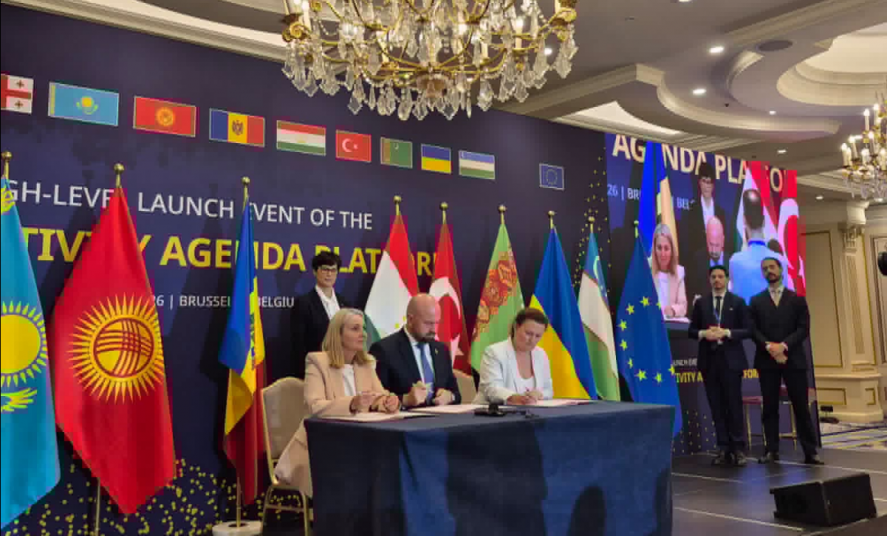
The Connectivity Agenda Platform and the first regional dialogue on Europe–Asia transport corridors were launched in Brussels, an initiative announced by EU Commissioner for Enlargement Marta Kos during the platform’s opening conference, TRIBUNA reports. The effort aims to strengthen transport, trade, energy and digital links along the Trans‑Caspian Corridor, connecting Europe with Central Asia via the South Caucasus.
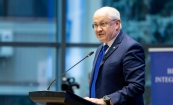
The Republic of Moldova, represented by Deputy Prime Minister Vladimir Bolea, is participating alongside regional states and international financial institutions in discussions focused on improving connectivity and integrating regional transport networks.
During the panel “Future Perspectives of the Trans‑Caspian Transport Corridor in the Black Sea and South Caucasus Region”, participants discussed the 2030 outlook and the conditions needed to make these corridors faster, more coherent and better integrated.
Deputy Prime Minister Bolea highlighted Moldova’s strategic direction of strengthening connectivity with the European Union and the wider Black Sea region through transport liberalisation and the development of key multimodal routes. These include an electrified railway line, a motorway and bypass infrastructure, full utilisation of port facilities, and the creation of logistics hubs for cargo flows.
Further discussions focused on Moldova–Ukraine cooperation within the framework of the Trans‑European Transport Network (TEN‑T), as well as progress and bottlenecks affecting regional corridors. Bolea referenced ongoing projects such as the modernisation of border crossing points and feasibility studies for strategic links like Ungheni–Chișinău–Odesa, which would directly improve transport times and logistics capacity.
Moldova also reaffirmed its goal of strengthening its role as a regional logistics hub between the EU, Ukraine, and the wider Caucasus–Central Asia region.
At the end of the meeting, the Republic of Moldova, the European Commission and the European Bank for Reconstruction and Development signed a Declaration of Intent. Through this document, the EU expresses readiness to support the modernisation of strategic road corridors within the TEN‑T network and reforms in the road sector. The project will support the development of a national Road Sector Masterplan, a Road Financing Strategy, a multi‑annual contract ensuring long‑term funding stability for the National Road Administration, and actions related to corporate governance and e‑mobility implementation.
In the same context, Moldova, the European Commission and the European Investment Bank announced the launch of the preparatory phase for a feasibility study on developing an electrified European‑gauge railway on the Ungheni–Chișinău route. The possibility of advisory support through the EU’s EPIC Facility—designed to assist infrastructure projects that enhance regional connectivity—was also discussed.


 Loading ...