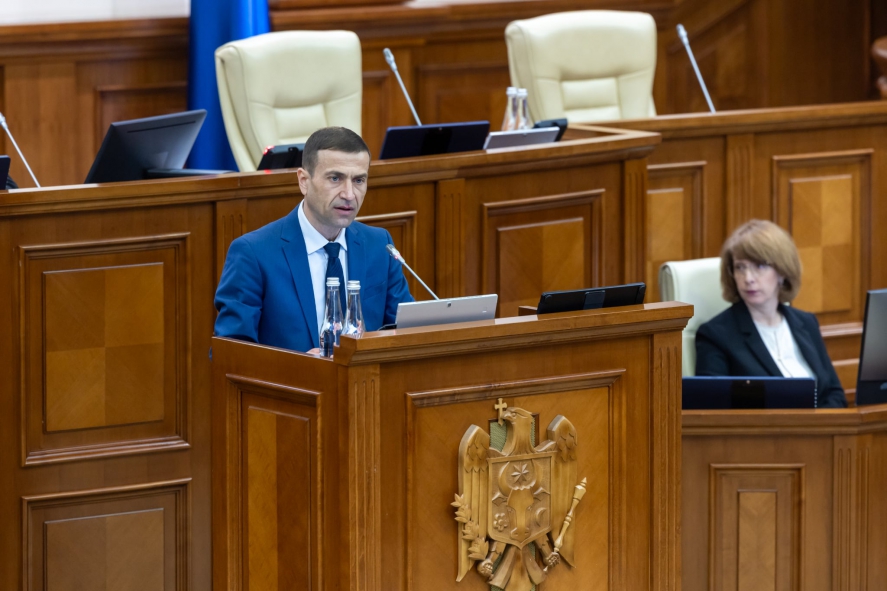
The draft Code on the organization and functioning of Parliament was approved in the first reading. The document was supported by 52 MPs from the Action and Solidarity Party (PAS), TRIBUNA reports.
Among the proposed changes are provisions aimed at preventing political party‑switching. The political configuration resulting from parliamentary elections may not be altered. Unaffiliated MPs who leave a parliamentary faction will not be allowed to join another faction. Likewise, parliamentary factions may not be formed by political parties that did not enter Parliament following the elections, nor by parties that are banned or declared unconstitutional.
The draft also introduces a “Government Hour.” During ordinary sessions, the Standing Bureau will designate a day for political debates with the participation of ministers or the prime minister. These debates will take place at the request of parliamentary factions at least once a month. In addition, the draft proposes establishing an “Opposition Day.” For the first plenary meeting of every sixth week of the parliamentary session, the Standing Bureau will include on the agenda topics proposed by opposition factions, independent MPs, and MPs from the opposition.
The initiative also regulates the organization of debates on agenda items. The Standing Bureau will set the debate framework depending on the complexity of the subjects. It will also determine, in agreement with faction leaders and committee chairs, the time at which voting will take place.
The draft sets rules for speaking time during plenary sittings. Interventions will be limited to 5 minutes for factions and 3 minutes for individual MPs. For statements on topics not included on the agenda, factions will have 7 minutes and MPs 5 minutes. The draft further proposes that the question‑and‑answer session during debates last 60 minutes, with the possibility of extension by a majority vote.
The draft Code also establishes that the working language of the legislature is Romanian.
The document was previously consulted with all parliamentary factions and representatives of civil society. For the second reading, it will be merged with the draft law on the status, conduct, and ethics of Members of Parliament.


 Loading ...