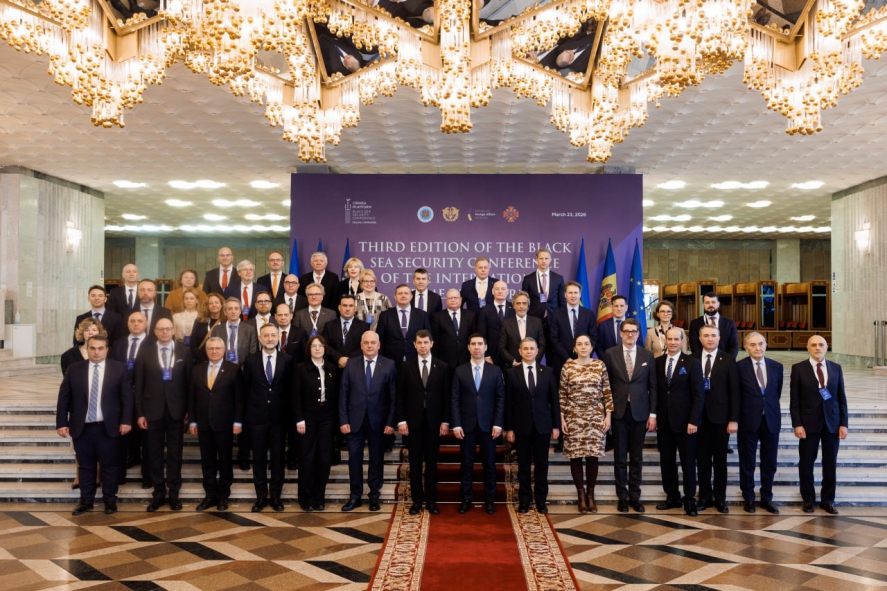
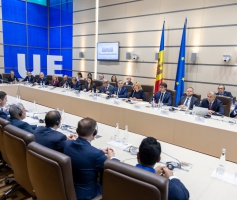
The Republic of Moldova is hosting the third edition of the Conference on Security in the Black Sea Region, held under the auspices of the International Crimea Platform, with delegations from more than 30 states and representatives of international organizations. The event is co‑organized by the Ministries of Foreign Affairs and Defence of the Republic of Moldova and Ukraine, with the support of the European Union, TRIBUNA reports.
The opening session took place in the presence of Moldova’s Foreign Minister Mihai Popșoi, Defence Minister Anatolie Nosatîi, and Ukraine’s Deputy Foreign Minister Olexandr Mischenko. Ukraine’s Foreign Minister, Andrii Sybiha, also joined the event online.
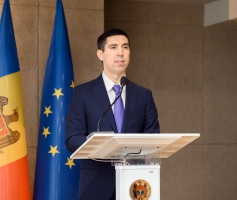
In his remarks, Deputy Prime Minister Mihai Popșoi spoke about the importance of the Black Sea region for European and international security and highlighted the need for solidarity and joint efforts to maintain regional stability. He emphasized the role of cooperation among states in identifying solutions to the challenges generated by Russia’s war, noting that Ukraine is defending not only its own sovereignty but also the security of the entire continent.
“We stand in solidarity with Ukraine and commend its resilience in the face of the brutal aggression of the Russian Federation. Because Ukraine resists, Russia is kept away from our borders and from the rest of Europe. Moldova remains a firm supporter of advancing the next steps toward operationalizing the Special Tribunal for the Crime of Aggression against Ukraine and establishing the Claims Commission. These objectives are among our country’s priorities during its Presidency of the Committee of Ministers of the Council of Europe,” stated Mihai Popșoi.
The Deputy Prime Minister also referred to the impact of the war on the Republic of Moldova, including the challenges posed by hybrid warfare, which go beyond conventional military dimensions: cyberattacks, disinformation and manipulation campaigns, as well as energy pressure. At the same time, he warned that Russia’s actions in the Black Sea generate major consequences for the environment and critical infrastructure, with effects felt not only in Ukraine but across the region.
“Russia’s operations in the Black Sea area create military, energy, and food security risks, affect freedom of navigation, and cause significant environmental damage, impacting all littoral states. A telling example is the recent bombardment of Ukraine’s energy infrastructure, which led to pollution of the Dniester River, leaving several districts in northern Moldova without drinking water,” concluded the Moldovan foreign minister.
Mihai Popșoi also highlighted the role of the European Union in strengthening regional security and stressed that its enlargement — including the accession of the Republic of Moldova and Ukraine — represents a strategic investment in Europe’s peace and stability.
In closing, the Deputy Prime Minister called for strengthened joint efforts by Black Sea littoral states and international partners to address the challenges facing the region.
The conference continues the dialogue launched in Bucharest (2023) and later in Sofia (2024), in the context of the Russian Federation’s aggression against Ukraine. This year’s edition includes four discussion panels focusing on the impact on security in the Black Sea and Sea of Azov regions, with emphasis on regional security strategies, ensuring freedom of navigation, protecting critical infrastructure, and enhancing regional cooperation — including the need for coordinated measures to strengthen energy and food security and to develop economic links.

 Loading ...