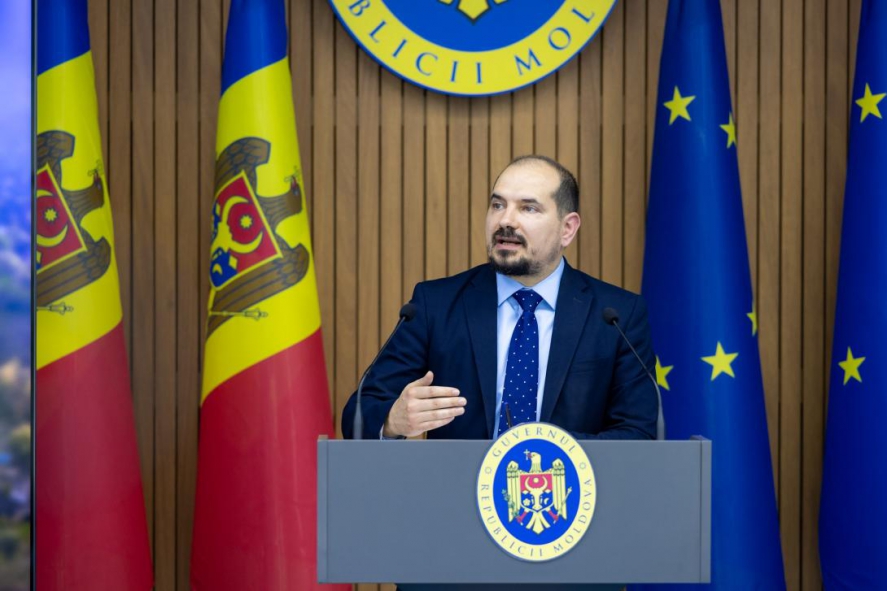
More than 400 municipalities have already adopted final decisions on voluntary amalgamation, while another roughly 200 are in the final stages of the process. The data were presented at a press conference held by the Secretary General of the Government, Alexei Buzu, TRIBUNA reports.
The Head of the State Chancellery noted that the amalgamation process was launched to strengthen municipalities’ capacity to provide better public services and attract investment in local infrastructure. Currently, over 87% of municipalities in the country have fewer than 3,000 residents. Eight out of ten families without access to water or sanitation live in localities administered by these municipalities. In these communities, the population has decreased by one third — twice as fast as the national average — and local administrations’ own revenues are declining.
“Only strong municipalities can ensure quality public services, modern infrastructure, and real investment in local development. The Government chose voluntary amalgamation first, because local elected officials best understand development priorities and the needs of citizens in their communities. We are carrying out this reform for people and for our communities,” Alexei Buzu stated.
According to the data presented, out of 890 municipalities (excluding Chișinău and Bălți), 761 — or 85.5% — have adopted decisions to initiate voluntary amalgamation. By July 31, approximately 400 municipalities had adopted final decisions. Another roughly 200 have conducted public consultations, prepared most of the required documents, and are expected to submit the decisions for voting in local councils. They can finalize the process by the end of August.
For around 161 municipalities, the process stopped after the initiation decision, due to unfinished negotiations or other difficulties. The Government will continue providing legal and technical assistance to these local authorities. Meanwhile, about 60 municipalities refused to participate in the voluntary process, and for them the normative amalgamation stage will follow.
The process required extensive mobilization at the local level: more than 2,000 joint working‑group meetings were held, over 88,000 direct interactions with citizens took place, and more than 75,000 questionnaires were collected to identify community problems and priorities.
The State Chancellery team carried out over 2,000 field visits and spoke directly with more than 5,000 mayors, local councillors, working‑group members, and citizens.
The priorities identified by citizens will guide the use of the Amalgamation Fund. Resources will be directed toward expanding water, sewage, gas, and street‑lighting networks; rehabilitating local roads; developing public transport and digital services; waste management; modernizing kindergartens and cultural centers; and supporting local economic development projects.
Local authorities still in the process are encouraged to finalize documents and adopt decisions by the end of August, in order to benefit from voluntary amalgamation status and the full package of incentives.
The goal of the reform is to ensure that every citizen, regardless of where they live, has access to better roads, water, street lighting, and quality public services.






 Loading ...