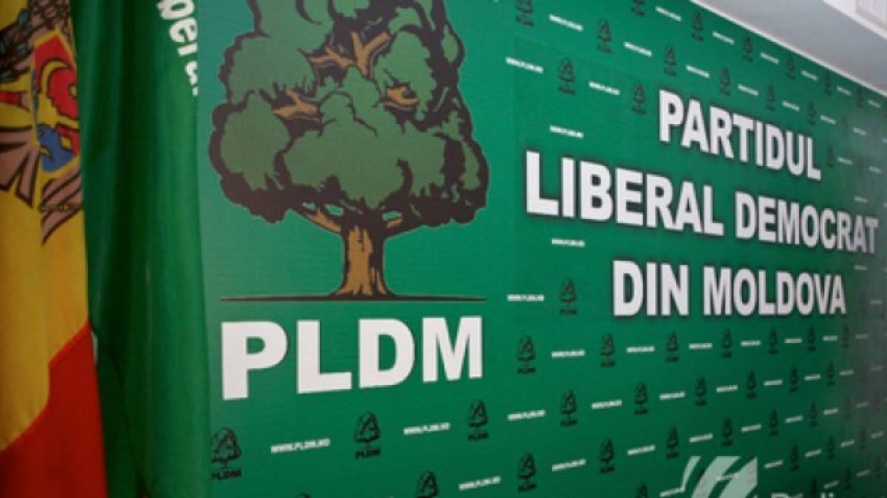
The Liberal Democratic Party of Moldova (PLDM) is drawing attention to the gravity of decisions taken by the presidential institution concerning the questionable amnesty of dangerous individuals, TRIBUNA reports.
According to the party, “the detention of a previously pardoned individual, suspected of organizing assassinations against Ukrainian officials at the direction of the Russian Federation’s special services, demonstrates the seriousness of the situation and confirms public concerns about arbitrary and non‑transparent decisions in matters of pardon and amnesty. The subsequent revocation of the pardon decree by President Maia Sandu only amplifies suspicions regarding the correctness of the process.”
PLDM expresses deep concern over the lack of clear public explanations from President Maia Sandu, as the final decision‑maker who signed the decree, regarding the real criteria behind the pardon.
“The fact that a person later detained for acts related to terrorism, political assassinations, and foreign interference benefited from presidential clemency represents a serious failure of institutional assessment and responsibility.
A similar pattern of decisions can be seen in the way the Amnesty Law was amended and applied, allowing the commutation of sentences for individuals serving life imprisonment and their subsequent release. Some of these individuals were later returned to prison, which demonstrates the erroneous nature of the initial decisions. Meanwhile, Radulov — a dangerous individual with multiple murders attributed to him, and allegedly the central figure behind the entire scheme — remains at large.”
The party recalls that, in the past, the President of the Republic of Moldova refused to pardon a mother of five children in a humanitarian case, while under questionable circumstances decisions were approved that led to the release of particularly dangerous individuals.
“The recent case of the person detained for preparing assassinations, previously pardoned, together with the amnesty and commutation of sentences for those serving life imprisonment, shows that these are not isolated incidents but part of a pattern of flawed decisions with implications for national and regional security. Even more concerning is that these decisions do not appear to be based on strictly legal reasoning.
We note that the individuals who drafted, promoted, and endorsed these legislative amendments have not been held accountable and continue to influence the justice system in the Republic of Moldova,” the party’s statement adds.
PLDM warns that these decisions cannot be separated from the danger of corruption, which appears to have reached high levels of the state, influencing political and administrative decisions that pose risks to public safety and the international reputation of the Republic of Moldova.
“The lack of reaction and the refusal to identify those responsible for these decisions leave the state vulnerable to criminal networks and hostile influences.
Moldovan society still does not have a public, complete, and explicit report on: • the authors of the amendments to the Amnesty Law;
• the manner in which these amendments were introduced;
• responsibility for commuting sentences and releasing dangerous individuals;
• the absence of cases reaching court and the absence of convictions.”
The party calls on the Presidency of the Republic of Moldova to publicly acknowledge the dysfunction of the pardon mechanism and the error of releasing dangerous individuals, as well as to support holding accountable those involved in decisions that endanger citizens’ safety.
PLDM demands: • the presentation of a complete report on all pardoned and released individuals, including those covered by the Amnesty Law;
• clarification of their current status;
• informing the public about monitoring measures and ongoing activities.
PLDM considers that selective justice, lack of transparency, and the irresponsible use of pardons and amnesties undermine the rule of law and create real risks for the Republic of Moldova and its citizens.

 Loading ...