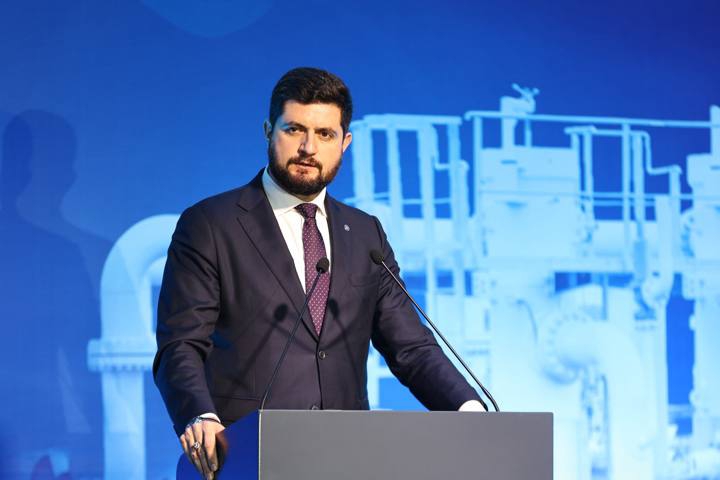
Minister of Energy Dorin Junghietu participated today in the Forum “Liberalization of the Natural Gas Market in the Republic of Moldova,” organized by the National Energy Regulatory Agency (ANRE) in cooperation with the Energy Community Secretariat, within the project “Moldova’s Energy Independence and Resilience” (MEIR), funded by the European Union. The event brought together suppliers, large and medium final consumers, experts, regulators, and public authorities, and was dedicated to promoting structured dialogue and strengthening a transparent, competitive, and functional market framework, TRIBUNA reports.
In his opening remarks, the minister highlighted the importance of liberalizing the natural gas market for energy security, economic resilience, and consumer protection.
“Transforming the natural gas market in the Republic of Moldova is neither a theoretical exercise nor an end in itself. It is deeply connected to our energy security, the resilience of our economy, and the way the state respects its consumers—whether households, public institutions, or companies. Diversifying supply sources and reducing dependence on a single supplier create the conditions for a competitive and stable market,” the minister stated.
Diversification is not only a geopolitical achievement but also the foundation for building a competitive market, and competition is essential for obtaining better prices, more flexible offers, and services tailored to consumer needs. Without real competition, the consumer remains vulnerable. With competition, the consumer gains the power of choice, Dorin Junghietu emphasized.
The minister also noted the technical and institutional achievements that support market functioning: joining the Vertical Gas Corridor, gaining access to gas exchanges, and registering new suppliers—all of which provide alternatives, options, and competition. Looking ahead, the priority remains integrating Moldova’s gas market into the regional and European natural gas market, a strategic step that ensures security and stability.
The forum also included a Business-to-Business (B2B) session, facilitating direct interaction between suppliers and consumers, with a focus on large and medium non-household consumers, who represent approximately 55% of annual gas consumption. The event provided a platform for dialogue, experience sharing, and strengthening trust in a modern, transparent, competitive, and consumer-oriented energy market.


 Loading ...