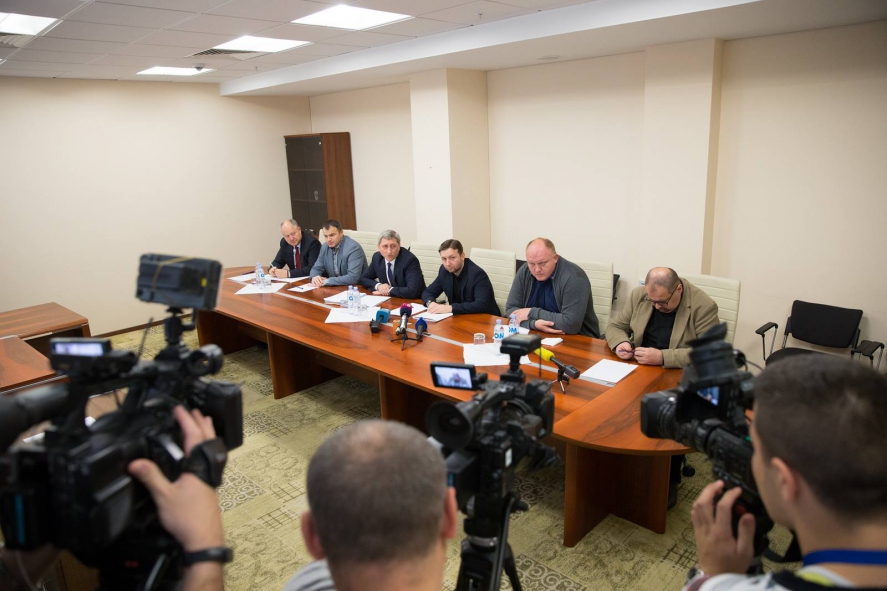
The parliamentary inquiry commission for elucidating the circumstances of interference of the Open Dialogue Foundation with Moldova’s domestic policy started hearings today, the parliament’s communication and public relations department has reported.
For the beginning, representatives of the Interior Ministry (MAI), Service for Prevention and Combating of Money Laundering, Intelligence and Security Service (SIS), Prosecutor General’s Office and Central Electoral Commission have been invited. The inquiry commission received from the Prosecutor General’s Office written information, as well as specification that the law does not allow prosecutors to attend such hearings.
The hearings took place at a closed meeting – a thing decided following requests from the Prosecutor General’s Office and SIS, taking into account the confidential character of the materials supplied, including the information provided by institutions from outside Moldova, which cannot be publicized without the agreement of those who supplied them.
From the first information received by the Commission, decision-makers found out that there is not one, but more NGOs from abroad which had carried out activities which might be not in compliance with Moldovan laws and which represents interference with Moldova’s domestic policy, as well as elements dealing with illegal financing of political organizations and politicians. Besides the group of NGOs made up around the Open Dialogue Foundation, the information shows also possible involvement of companies in this case.
Taking into account the importance of information supplied by institutions, the Commission demanded additional details in order to understand the way this group of foreign NGOs acted in Moldova and to what extent the group’s actions could influence the domestic policy or affect the state’s national security. Also, the Commission wanted to understand to what extent the information appeared in mass media on the relations of these NGOs with foreign secret services, persons involved in bank frauds in Moldova and Moldovan politicians are backed by official information. The answers received are to be analyzed and presented in the final report of the Commission.
The work of the parliamentary commission continues. Representatives of organizations contained in information supplied by institutions, as well as representatives of the civil society will be invited to hearings, in order to provide the Commission with an as good as possible expertise on the subject brought for discussion and a fair assessment.
It is worth mentioning that the activity of the parliament’s inquiry commission boils down to the collection of information, its analysis and formulation of recommendations, and it has no legal powers. The role of this commission is not to accuse or convict; the Commission has the role to make ascertainings. We also inform the public that the Commission’s work will end with a report due to be submitted to parliament and the public opinion will be informed in detail about the results of this parliamentary inquiry.
www.moldpres.md

 Loading ...