In recent years, much has been said about the European integration process in which the Republic of Moldova is engaged. However, few people know how this process will affect agricultural producers. More specifically, what will change for them after the Republic of Moldova joins the European Union.
First of all, it should be noted that agricultural producers in the European Union are protected through a complex set of financial, legislative, and commercial mechanisms, with the Common Agricultural Policy (CAP) serving as the central pillar. The protection provided to European farmers focuses on four major areas.
The first area is direct financial support and income protection. Farmers receive direct payments based on cultivated land area or livestock numbers. These subsidies offset market price volatility and ensure a minimum standard of living for farmers. This framework also includes the so-called crisis reserves. In cases of major market disruptions, such as extreme weather events, geopolitical crises, or sharp increases in fertilizer and energy costs, the EU activates emergency funds to provide rapid liquidity and temporary assistance.
The second area is protection against unfair trading practices. Small producers are legally protected from large supermarket chains and major buyers. Practices such as delayed payments for perishable goods, last-minute order cancellations, or unilateral contract modifications are prohibited. Particular emphasis is placed on the requirement for clear written contracts between farmers and processors, giving producers stronger bargaining power.
The third area is external trade protection. The EU requires imported agri-food products from outside the Union to comply with phytosanitary and safety standards similar to those applied within the EU, thereby preventing unfair competition from cheaper but less regulated products. In addition, EU international trade agreements contain safeguard clauses that allow for the temporary suspension of tariff preferences or the imposition of duties if large-scale imports threaten the stability of local producers.
The fourth area is the protection of intellectual property and quality. Specifically, the EU provides legal protection for product names closely linked to a particular geographical area or a traditional production method.
Since questions frequently arise regarding tobacco producers when discussing the protection of agricultural producers, I would like to address several relevant aspects in this regard.
It should be noted that in the European Union, tobacco growers do not receive direct subsidies specifically for tobacco production. Nevertheless, tobacco farmers in the 12 producing Member States, including Italy, Spain, Poland, Greece, and Romania, are protected and supported indirectly through the general mechanisms of the Common Agricultural Policy (CAP) and market regulations.
Former tobacco-specific subsidies have been converted into decoupled payments. As a result, farmers receive a fixed amount per hectare regardless of the type of crop cultivated. This measure ensures income stability while allowing them to switch freely to other agricultural crops should the tobacco market decline.
It is also worth noting that raw tobacco is officially recognized as an agricultural product under Annex I of the Treaty on the Functioning of the European Union. The sector is governed by a specific regulation (No. 1308/2013), which allows for the creation of interprofessional organizations bringing together growers, processors, and traders. Through these organizations, farmers can enter into legally recognized collective agreements that provide contractual predictability and more secure pricing when dealing with large multinational corporations in the industry.
Furthermore, through the European Agricultural Fund for Rural Development (EAFRD), regions historically dependent on tobacco cultivation receive special financial assistance. This support finances farm modernization projects as well as economic diversification and conversion measures.
I considered it necessary to address all these important aspects so that matters are as clear as possible when discussing the protection of agricultural producers in the context of European integration.
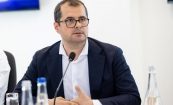
Oleg Țurcan
Businessman, Investor, Philanthropist




 Loading ...