
The Electoral Code has been supplemented with new regulations on postal voting and the organization of elections in the Autonomous Territorial Unit of Gagauzia, aimed at strengthening the transparency, fairness and efficiency of the electoral process. The provisions are included in a bill amending the Electoral Code, approved by Parliament in the second reading, TRIBUNA reports.
The bill seeks to strengthen the electoral regulatory framework by clarifying existing procedures, eliminating gaps identified in electoral practice, and introducing mechanisms designed to increase transparency, fairness, integrity and efficiency at all stages of the electoral process.
A new chapter is dedicated to alternative voting methods, particularly postal voting. The bill introduces definitions for postal voting, the remote identification of voters through digital means, and the electoral register for postal voting. It also establishes a separate electoral council responsible for organizing postal voting. Voters residing abroad will be able to opt for postal voting following a prior registration and eligibility verification procedure.
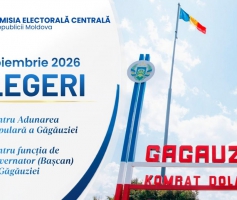
Another amendment concerns the election of deputies to the People’s Assembly of Gagauzia. The bill provides for a transition from the single-member constituency system to a proportional system, similar to the one used for the election of local councils. To ensure stability in the electoral framework and a gradual transition, the elections for deputies to the People’s Assembly of Gagauzia scheduled for November 15, 2026, will be held for the final time under the majority system.
The bill also strengthens the status of the Central Electoral Council of Gagauzia by clarifying its powers and integrating it into the unified electoral administration system. The institution will consist of at least seven and no more than 11 members. Appointees will have to meet the same eligibility requirements and undergo the same verification procedures established by law for holders of and candidates for public office.
The document also includes measures to prevent the use of administrative resources for electoral purposes. Central and local public authorities will be required to adopt administrative acts transparently establishing the conditions for providing premises for meetings with voters. They will also have to ensure a minimum number of rooms that electoral contestants can use under equal conditions. At the same time, meetings with voters will have to be held outside the working hours of public institutions to prevent the misuse of administrative resources during electoral campaigns.
Adjustments are also provided regarding the exercise of the right to vote. Registration at a permanent or temporary residence will have to be completed at least three months before election day for voters to be able to vote based on those registration details.
The bill also amends the rules governing accounts used during electoral campaigns and by initiative groups. The deadlines and procedures for opening, operating, suspending and closing accounts marked “Electoral Fund” and “For the Initiative Group” are adjusted, taking into account the working hours of banking institutions and the experience gained during recent elections. At the same time, electoral contestants will be able to use, in addition to bank accounts, payment accounts provided by service providers authorized by the National Bank of Moldova.
The bill also includes amendments concerning candidate registration, based on recommendations made by the OSCE/ODIHR Election Observation Mission in its final report on the parliamentary elections of September 28, 2025. Thus, if the exclusion of candidates deemed ineligible results in a failure to meet the minimum gender representation quota, electoral contestants will be given a deadline to adjust their lists and bring them into compliance with legal requirements.
When drafting the legislative initiative, the authors — a group of PAS MPs — took into account proposals put forward by the Central Electoral Commission following post-election assessments of the 2024 elections and the 2025 parliamentary elections. The initiative also incorporates the necessary regulatory solutions for implementing Constitutional Court Decision No. 8 of July 9, 2026.
The authors of the bill held public consultations both in Chisinau and Comrat.




 Loading ...