The Liberal Democratic Party of Moldova (PLDM) is calling on the Action and Solidarity Party (PAS) to fully assume responsibility for governing. According to PLDM, this must be done not through “technocratic”, “independent”, or “compromise” formulas, but through political figures who asked for citizens’ votes, promised reforms, and must answer directly for the results of governance, TRIBUNA reports.
PLDM argues that PAS controls the parliamentary majority, appoints officials, sets state policy, and claims credit when convenient. Under these conditions, the party “has no right to transfer political costs onto individuals presented as technocrats or crisis solutions.” Governing, PLDM says, requires difficult decisions, direct accountability, and political courage.
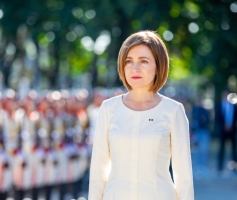
The party also highlights the direct political responsibility of President Maia Sandu for the current act of governance:
“Maia Sandu cannot be separated from this government. She was PAS’s political guarantor, its main image vector, and the decisive factor in building the political structure that brought the current majority to power.”
PLDM states that the President cannot claim the merits of governance when they are presented in a propagandistic manner while distancing herself from failures. “There can be no influence without responsibility, no political promotion without consequences, and no public guarantee without accountability.”
The party insists that Maia Sandu must assume political responsibility for the people she promoted, for the majority she endorsed, and for the governance model built around her and PAS.
PLDM calls on PAS and President Sandu to end what it describes as double political positioning: control without responsibility, influence without accountability, and political promotion without consequences. Citizens, the party says, have the right to know who leads, who decides, and who answers for outcomes.
PLDM also urges PAS to stop simulating reforms and to implement the changes promised during the electoral campaign. The mandate received from citizens, the party argues, was not given to protect political clientele or preserve privileges, but to build the rule of law, a functional economy, efficient administration, and European integration with tangible benefits for people.
Key reform demands outlined by PLDM
- Administrative‑territorial reform PLDM insists this must be more than bureaucratic amalgamation. It should be part of a national development project addressing depopulation, aging, lack of public services, and inefficient budget spending. The reform should be linked to balanced urbanization, consolidation of viable localities, development of former district centers, infrastructure modernization, and directing investments toward communities with economic potential.
- Real depoliticization of justice The party calls for freeing the judiciary from political control, protecting judges from pressure, conducting impartial corruption investigations, and returning to the principle that justice is done in court, not in press conferences or TV studios.
- Economic reform aligned with EU integration PLDM argues that Moldova cannot advance toward the EU with an economy dependent on consumption, imports, remittances, and loans. European integration requires productivity, modernized industry, competitive agriculture, export capacity, and functional administration.
- Transparency in the EU integration process PLDM stresses that European integration belongs to the Republic of Moldova and its citizens, not to a single party. No one has the right to turn this process into an electoral tool or a cover for abuses, clientelism, or internal failures.
The party concludes: “Changing a prime minister does not change the system. But political assumption of governance and dismantling the system can change the direction of the Republic of Moldova.”

 Loading ...