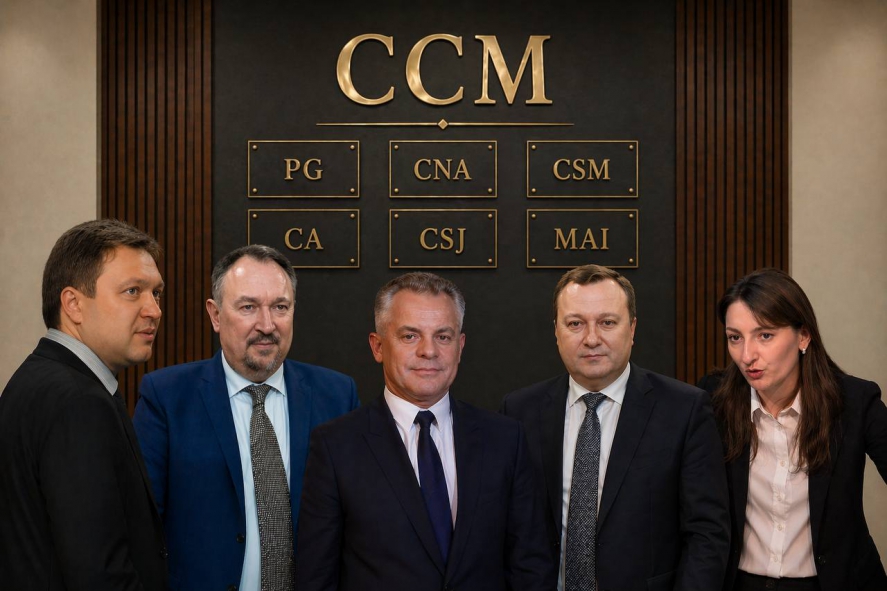
Thirteen years after the Constitutional Court’s decision of April 22, 2013, which removed him from the position of Prime Minister, Vlad Filat has issued a statement reflecting on the political and judicial developments in the Republic of Moldova.
The former prime minister notes that the beneficiary of the political reconfiguration at that time, Vladimir Plahotniuc, is now awaiting a verdict in the “Bank Fraud” case, with prosecutors requesting a 25-year prison sentence. Filat highlights the symbolism of the date, stressing that the current judicial process is unfolding exactly 13 years later, on April 22.
He argues that the 2013 Constitutional Court decision was not, in his view, a purely legal act, but a turning point that marked the beginning of what he describes as the “capture of the state.” According to Filat, in the years that followed, Plahotniuc gained control over state institutions, leading to the dismantling of the banking system and the National Bank’s reserves — events commonly referred to as the “billion theft” — and culminating in full state capture.
Filat claims that these developments were later acknowledged by international institutions as well as the Parliament of the Republic of Moldova. He further argues that the current judicial proceedings risk closing the chapter without a comprehensive investigation into the broader system of state capture.
He also refers to the role of the Constitutional Court during that period, stating that it was used as a political instrument. Filat recalls an informal discussion in which he was allegedly told that the Court had acted like a “court-martial” during the political conflict, and that in “peacetime” his parliamentary mandate would not be revoked — a promise he says was later contradicted when his mandate was annulled.
In his statement, Filat questions whether a potential 25-year sentence for Vladimir Plahotniuc represents genuine justice or merely a partial conclusion to a much deeper systemic issue. He argues that without a full investigation into the mechanism of state capture, justice remains incomplete.
He further claims that those who contributed to his political removal are now among those prosecuting Plahotniuc, suggesting that the same informal structures of influence continue to exist behind the institutions of the state.
Filat concludes that the key issue is not only the conviction of one individual, but whether the state is capable of confronting its own past. Without a full clarification of the period of “captured state,” he warns, society will not be able to move beyond its consequences.








 Loading ...