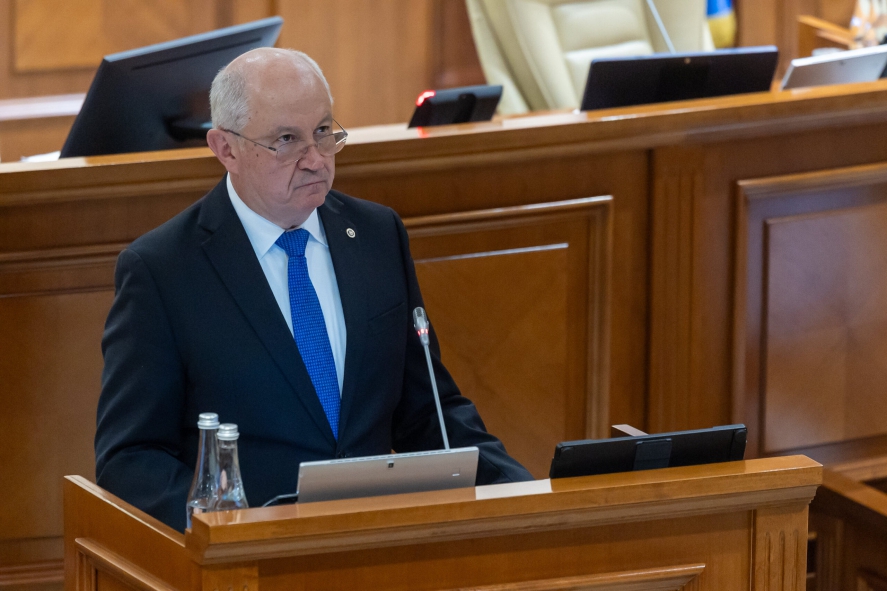
Parliament has adopted the draft decision establishing a state of emergency in the energy sector for a period of 60 days, starting 25 March 2026. The document was supported by 72 MPs, TRIBUNA reports.
The Government proposed the measure after the main electricity supply line for the Republic of Moldova — the Vulcănești–Isaccea transmission line — was disconnected following Russia’s attacks on Ukraine’s civilian energy infrastructure. Although consumers are currently supplied with electricity from domestic sources and imports via alternative routes, including the four 110 kV interconnection lines with Romania, authorities warn that the situation remains critical.
Prime Minister Alexandru Munteanu told Parliament that the state of emergency will allow authorities to act swiftly and in a coordinated manner to protect the country’s energy security and the safety of citizens.
“This is not a decision for the Government — it is a decision for the people, for stability, for our collective safety. The message to citizens is clear: in this context, it is essential to use energy rationally, avoid unnecessary consumption, especially during peak hours, and rely on official information. Let us remain united. We have already shown that we can withstand crises; we have faced many and remained standing. We will manage this situation with calm, responsibility, and dignity,” Prime Minister Munteanu stated.
During the state of emergency, the Government will take rapid measures to secure energy resources and equipment needed for the energy infrastructure. It may also allocate additional financial resources for purchasing energy and equipment. If necessary, authorities may introduce energy‑saving measures, and certain economic operators may be required to limit the provision of goods and services — including import or export — if this contributes to mitigating the effects of the crisis.
For the next 60 days, energy companies will be empowered to procure, produce, transport, distribute, or supply energy resources across the entire territory of the country. Mass media outlets will inform the public about the causes and scale of the emergency.
Government acts adopted during the state of emergency will be binding for central and local public authorities, economic operators, public institutions, and all persons on the territory of the Republic of Moldova.
The Vulcănești–Isaccea overhead transmission line was disconnected after Russian attacks on Ukraine’s civilian energy infrastructure. This line is one of the country’s most important electricity import routes, covering approximately 70% of total consumption. Following the disconnection, starting 25 March, a deficit of up to 400 MW is expected during peak hours. Authorities note that reconnection is complex: before technical teams can intervene, debris from drones must be identified and removed in the adjacent area on the Ukrainian side.





 Loading ...