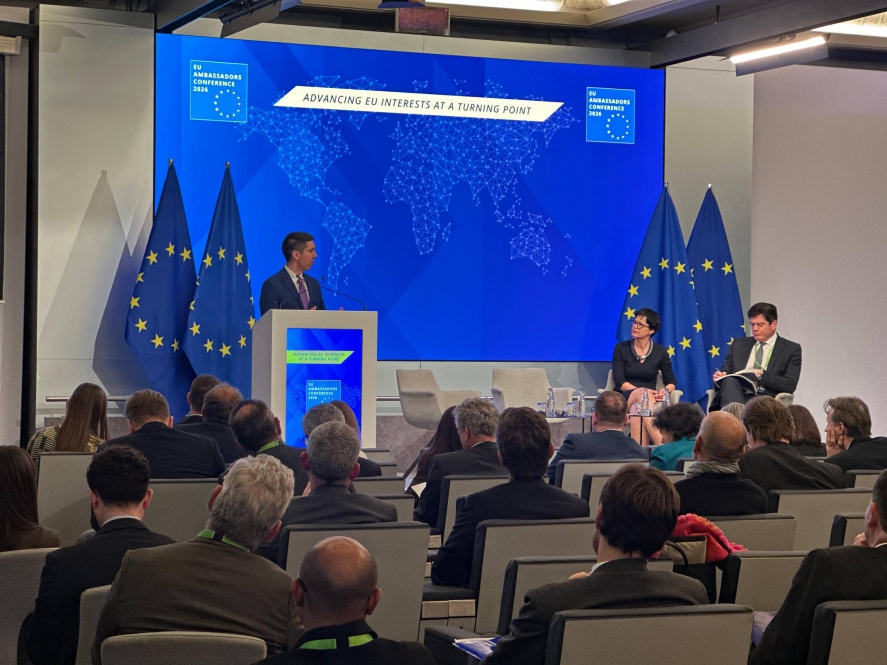
At the invitation of the EU High Representative for Foreign Affairs and Security Policy, Vice President of the European Commission Kaja Kallas, Deputy Prime Minister and Minister of Foreign Affairs Mihai Popșoi participated in the Annual Conference of EU Ambassadors, held in Brussels, TRIBUNA reports.
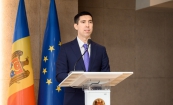
During the panel “Strengthening the European Union through Enlargement,” Mihai Popșoi — together with the European Commissioner for Enlargement, Marta Kos, and Albania’s Minister for Europe and Foreign Affairs, Ferit Hoxha — spoke about the importance of the enlargement process as a strategic tool for European peace, security, stability, and resilience.
Minister Popșoi highlighted the progress made by the Republic of Moldova in its EU accession process and reiterated the authorities’ firm commitment to continuing reforms. He emphasized that enlargement remains one of the EU’s strongest geopolitical instruments, and that a merit‑based process strengthens and encourages democratic transformation in candidate countries.
“Through the implementation of reforms, regulatory alignment, and integration into EU structures, candidate countries become stronger partners even before formal accession. The Republic of Moldova is a responsible partner and continues with determination to advance the reforms it has committed to. We support the enlargement of the European Union and consider it essential that this process remain merit‑based, for the benefit of both candidate states and a stronger, more resilient Europe,” Mihai Popșoi stated.
The Deputy Prime Minister also highlighted Moldova’s contribution to European security, including participation in missions under the Common Security and Defence Policy, alignment with EU restrictive measures, and efforts to counter hybrid threats.
This year’s event, held under the theme “Advancing EU Interests at a Turning Point,” brought together approximately 200 EU ambassadors, EU Special Representatives, heads of civilian and military missions and operations under the Common Security and Defence Policy, as well as officials from EU institutions and member states.
 Loading ...