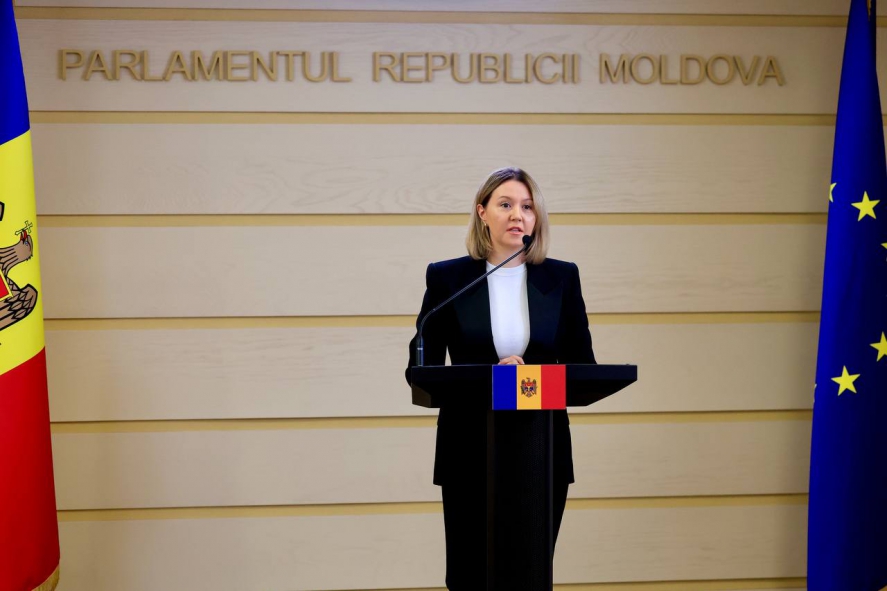
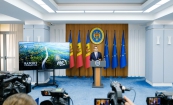
Olga Cebotari, a Member of Parliament representing the Party of Socialists of the Republic of Moldova (PSRM) and Vice-Chairwoman of the European Integration Commission within the PSRM parliamentary faction, addressed several aspects of the European Commission’s annual Enlargement Report on the Republic of Moldova during a briefing held today at Parliament. She highlighted the main shortcomings and problems identified by the European Commission, TRIBUNA reports.
The politician stated that “although over the past two days we have heard only about major achievements and significant progress made by our country, the document also points to numerous shortcomings in various areas. The only chapter rated as showing very good progress was Chapter 31, which concerns foreign, security and defence policy. In most areas, the European Commission assessed Moldova’s progress as good, although in some sectors the results were considerably more modest.”
“The European Commission’s report confirms progress in the accession process, but at the same time highlights significant shortcomings in several areas. Many of last year’s recommendations have been only partially implemented and remain valid. We adopt laws, but their implementation continues to be a problem. This is where the Government must focus its efforts so that reforms produce tangible results.
We acknowledge the progress noted by the European Commission. However, for many citizens, this optimism is not sufficiently reflected in their standard of living, the quality of public services or access to justice. People see progress on paper, but not in their everyday lives, and this remains the biggest problem, in my opinion. The recent cyberattack and the death of an elderly woman while applying for compensation worth 25–50 euros say much more about the actual situation in the country,” she added.
The MP stated that the first problem concerns the functioning of the judiciary and the effectiveness of the fight against corruption. The Commission points to staff shortages and the length of judicial proceedings. Thus, in 2025, 38 first-instance proceedings involving high-level corruption cases concerning 85 individuals were discontinued because the statute of limitations had expired.
The second problem, according to Cebotari, concerns the quality of democracy and parliamentary oversight. The report notes that dialogue between the parliamentary majority and the opposition is insufficient and that no plenary sitting was dedicated to legislative proposals submitted by the opposition.
The third problem, Olga Cebotari noted, is the state’s capacity to implement reforms.
“Public administration reform is progressing, but shortcomings remain. For the actions scheduled for 2025 under the implementation programme of the Public Administration Reform Strategy 2023–2030, the completion rate reported by the authorities stands at 65%.
The link between policy planning and the budget is one of the weakest components of the system and deteriorated in 2026. Merit-based recruitment is not consistently applied, while the remuneration system remains fragmented and uncompetitive. Under these circumstances, how can we attract and retain the people needed to carry reforms through to completion?” she added.
The parliamentarian also noted that staff shortages are a recurring issue throughout the report: approximately 20% of civil service positions are vacant; the Competition Council and the National Crisis Management Centre are understaffed, while the Agency for Intervention and Payments in Agriculture (AIPA) needs to strengthen and retain its workforce.
Other problems highlighted by Olga Cebotari include the deterioration of the country’s fiscal position, with the deficit remaining high, public debt following an upward trend, public investment execution remaining low, and the 2026–2028 budgetary framework not yet approved.
She also noted that the Commission calls for clearly defined responsibilities in the management of public funds, a sufficient number of qualified auditors to verify European funds, and the implementation of recommendations issued by the Court of Accounts.
Additional concerns include the incomplete alignment of Moldova’s policies with those of the European Union, living standards and economic competitiveness, insufficient coverage of social services and shortcomings in targeting assistance, inadequate spending on research and development, the economy’s preparedness for the EU internal market, efforts to combat money laundering, and repeated delays in making the Vulcănești–Chișinău power transmission line operational.
The MP also referred to the roadmap, stating that the document establishes priorities for 2027 but does not guarantee the closure of negotiation chapters.
“Moving towards the provisional closure of chapters depends on meeting the interim benchmarks related to the rule of law. One of the conditions for closing chapters is achieving substantial progress in judicial reform and demonstrating tangible results in the fight against corruption. The inclusion of a chapter in the timetable does not mean that the problems in that area have already been resolved.
We call on the Government to align the National Accession Plan with the European Commission’s roadmap and present Parliament with the deadlines, resources and responsibilities required to achieve the objectives, along with regular reporting on the results,” she stated.
Olga Cebotari emphasized that the role of the opposition is to draw attention to these problems, as was also the case in other countries that joined the European Union in the past.
“The opportunities offered by the European integration process must be used responsibly so that citizens can experience progress through better access to justice, higher-quality public services and greater opportunities for economic development. People expect real results and prosperity, not merely laws adopted to tick boxes and impressive-looking reports,” the politician concluded.




 Loading ...