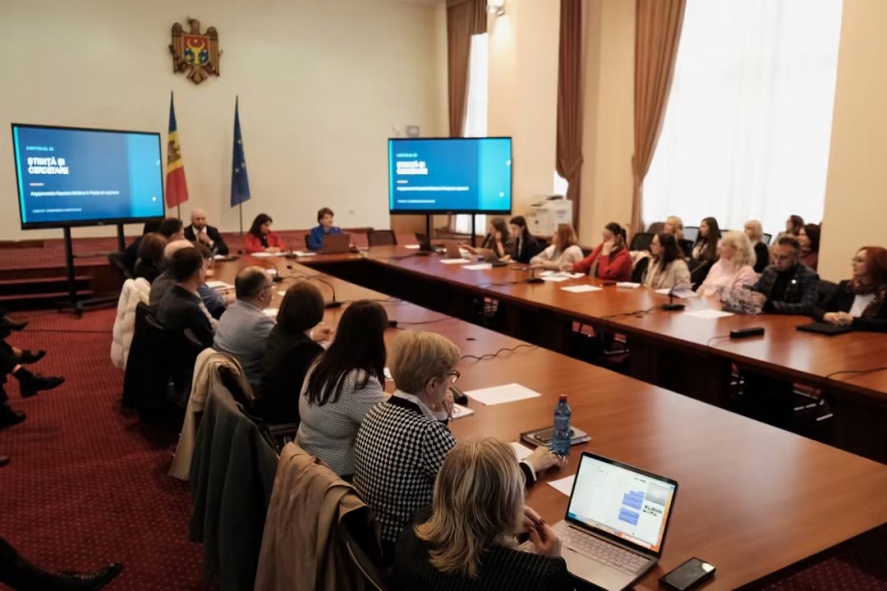
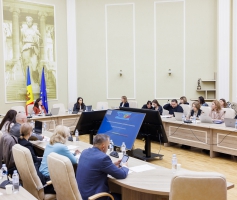
The Ministry of Education and Research (MEC) presented the commitments undertaken by the Republic of Moldova through its Negotiating Position for accession to the European Union (EU) in the fields of education, youth, sports and research to representatives of public authorities, institutions, organizations and other interested parties.
The consultations held on October 26 focused on Chapter 25, “Science and Research,” and Chapter 26, “Education and Culture,” as well as the measures required to fulfill the commitments undertaken.
“Alignment with European standards involves not only adopting the regulatory framework but also ensuring its effective implementation in practice. We aim to turn these commitments into tangible results for students, teachers, young people, athletes and the research community, strengthening the quality and competitiveness of our system,” said Ludmila Pavlov, Deputy Secretary General of the Ministry of Education and Research.
In education, the commitments include adopting a new curriculum, developing digital skills, expanding the network of Model Schools, and other measures. Alignment with European standards will contribute to improving the quality of education, modernizing educational institutions and enhancing teachers’ professional skills.
In research, the Republic of Moldova aims to integrate into the European Research Area, increase participation in the Horizon Europe programme, boost funding for research and innovation, develop research infrastructure, and strengthen cooperation between researchers and the business community. EU accession will provide researchers and specialized institutions with greater access to European funding opportunities, international research networks and infrastructure, as well as opportunities to develop scientific partnerships.
In the youth sector, priorities include implementing the “Youth 2030” Strategy, developing the regulatory framework for volunteering, and launching the European Youth Card.
In sports, the commitments include aligning national policies with European priorities, approving a new funding formula for high-performance sports, and renovating 22 sports facilities, among other measures.
In the fields of youth and sports, European integration will create new opportunities to participate in European programmes, mobility initiatives, volunteering activities and social innovation projects. It will also contribute to the development of high-performance sports, improving the skills of specialists and coaches, and promoting inclusion and accessibility in sports.
Chapters 25 and 26 are part of Cluster III, “Competitiveness and Inclusive Growth,” for which EU accession negotiations were officially opened on October 13, 2026, alongside Cluster II.
Progress in fulfilling these commitments will be assessed annually by the European Commission and EU member states, including through Enlargement Reports and monitoring meetings.
 Loading ...