The national campaign launching the “Moldova Pregătită” National Programme continues in the southern region of the Republic of Moldova, where the National Crisis Management Centre (CNMC) and the State Chancellery, together with local public authorities and community representatives, organised a regional session dedicated to preparing the population and strengthening crisis prevention and response capacities, TRIBUNA reports.
The event was attended by Speaker of the Parliament of the Republic of Moldova Igor Grosu, who addressed the communities of the southern region, emphasising the importance of preparedness, responsibility, and cooperation between state institutions and citizens:
“When I say ‘Moldova Pregătită’, it is not just about exercises and events like these. A prepared Moldova begins with each of us, at home, within our families. Every citizen needs to know what to do, where to turn, and how to act in the event of a crisis. And we have examples we can learn from.”
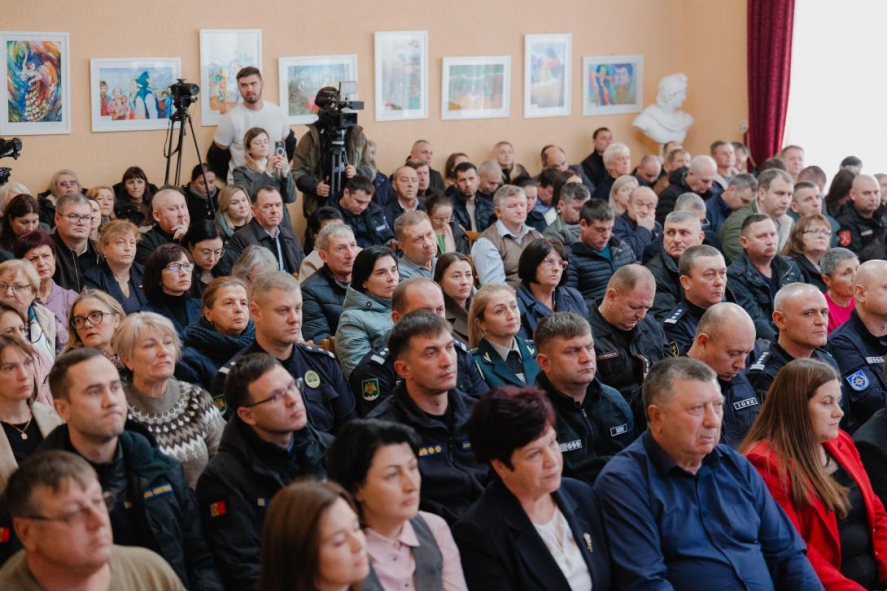
The event, held in Ștefan-Vodă, brought together mayors and representatives of regional authorities, members of territorial and local crisis management commissions, representatives of decentralised government services, rescuers, firefighters, school principals, family doctors, civil society organisations, media representatives, and other interested participants.
From November 19 to 21, the campaign is taking place in the central, southern, and northern regions of the country. It began with the official launch in Chișinău, continued on November 20 in Ștefan-Vodă, in the southern region, and on November 21 in Edineț, in the northern region.
Through these activities, the campaign brings crisis preparedness closer to communities, turning practical recommendations into concrete measures accessible to families throughout the country.
Participants were introduced to three practical tools for the population: the Resilience Guide for Families, Communities and Citizens, the Emergency Backpack for the First 72 Hours, and the “Alerts” module in the EVO application.
The presentations included recommendations on household preparedness, organising essential supplies, and simple measures citizens can take to ensure their own safety and that of their loved ones.
Through a practical demonstration of a sample emergency backpack, participants learned how to gradually assemble a set of useful products and items for the first 72 hours of a crisis, according to the needs of each family.
The campaign does not signal an impending crisis and does not involve any planned interruptions to public services.
The 72-hour period is an internationally recognised reference timeframe for community preparedness, enabling people to cope more easily with temporary difficulties while authorities intervene, assist those in danger, and work to restore affected services. Citizens’ preparedness complements the authorities’ response rather than replacing it.
The “Alerts” module of the EVO application, developed by the Electronic Governance Agency in cooperation with the CNMC, was also presented. Through this module, citizens can access official information, safety recommendations, and guidance on actions to take before, during, and after a crisis.
Special emphasis was placed on the role of local public authorities within the national crisis management system.
CNMC representatives explained the mechanisms for activating territorial and local commissions, the responsibilities of the institutions involved, and the procedures for coordinating interventions, including assistance for vulnerable people.
Crisis preparedness is a joint effort involving the entire system of public authorities, from the national to the local level.
Through these meetings, cooperation between institutions and communities is being strengthened to ensure that prevention, preparedness, response, and recovery form part of a coordinated effort.
Regardless of the region, citizens should know that the authorities stand by them, work together to ensure their safety, and are prepared to intervene, provide assistance, and restore affected services whenever necessary.
Participants also observed practical exercises presented during the National Resilience Congress, illustrating how state institutions coordinate their actions, exchange information, and make decisions in crisis situations.
These activities are part of the authorities’ ongoing preparations to ensure an organised and effective response.
The campaign promotes a simple principle: the state is responsible for preventing and managing crises, while the preparedness of citizens and communities contributes to protecting the population and making emergency interventions more effective.
The first 72 hours represent a reference period for individual and family preparedness, during which authorities intervene, prioritise those in danger, and take action to restore affected services.
Information and recommendations for citizens are available on the platform www.72ore.md.
The campaign is implemented with the support of GIZ Moldova, funded by the German Government.



 Loading ...