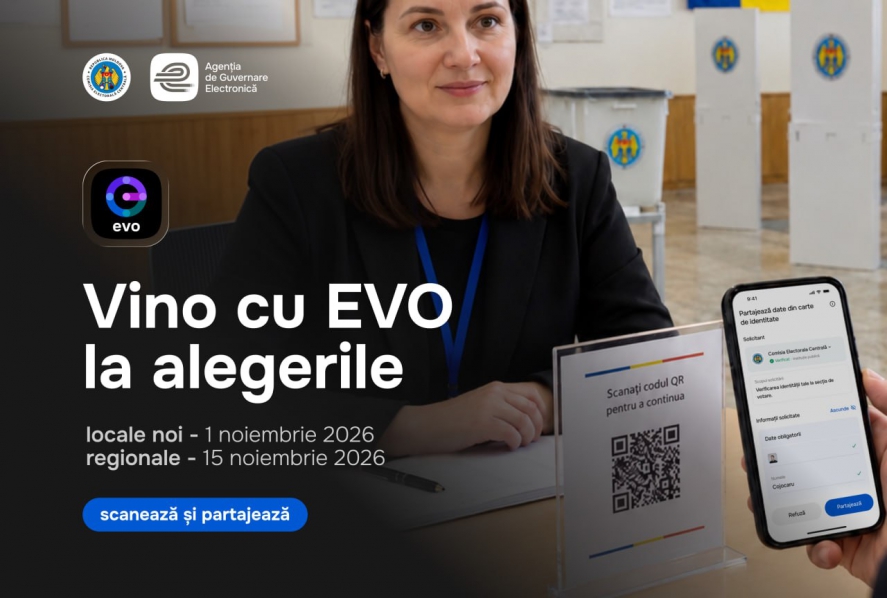
The Central Electoral Commission (CEC), in partnership with the Electronic Governance Agency (EGA), has announced a pilot project allowing voters to verify their identity using a digital identity card or identity document in the EVO application at the local by-elections scheduled for November 1 and the elections in the Autonomous Territorial Unit of Gagauzia on November 15, TRIBUNA reports.
The voting process will remain unchanged: ballot papers will continue to be printed on paper, and voters will mark them using the traditional stamp inside the voting booth. The innovation applies exclusively to the identity verification stage at the operator’s desk within the Voter Registration System.
“Through this initiative, we are offering voters an additional way to identify themselves at polling stations by using digital technologies they are already familiar with. For the CEC, modernizing the electoral process means making it more accessible to citizens while respecting security requirements and personal data protection. The pilot phase will allow us to assess how this solution works in practice and prepare for its use in future elections,” said Angelica Caraman, President of the Central Electoral Commission.
“Digital public services must be useful where they matter most to people. Piloting the use of digital identity documents for voting helps us achieve our goal of 100% digital transformation by providing a modern alternative that is just as secure as a physical document, built on the architecture of the European Digital Identity Wallet and protected by strict security mechanisms,” said Nicoleta Colomeeț, Director of the Electronic Governance Agency.
How the Procedure Works at the Polling Station
-
- Scanning: The voter opens the EVO application and scans the QR code displayed on the operator’s desk at the polling station.
-
- Confirmation: The application displays the set of data required under CEC identification procedures, and the voter confirms the sharing of this information directly from their own phone.
-
- Validation: The system instantly verifies the identity data, after which the voter proceeds to receive their ballot paper.
Security, Optional Use, and European Standards
The use of digital identity documents is voluntary. Voters who prefer to present their physical identity cards may continue to do so without any restrictions. When presenting a digital identity document, voters share their data with their consent, and the CEC requests only the information necessary to verify their eligibility to vote, in accordance with the legal framework on personal data protection.
The results of this pilot phase will serve as the basis for expanding the use of digital identity documents to all future national elections.
The CEC’s integration of the EVO Digital Identity Wallet continues the process launched on April 1, 2026, when the Electronic Governance Agency began the integration of the digital wallet for public institutions and private companies.








 Loading ...