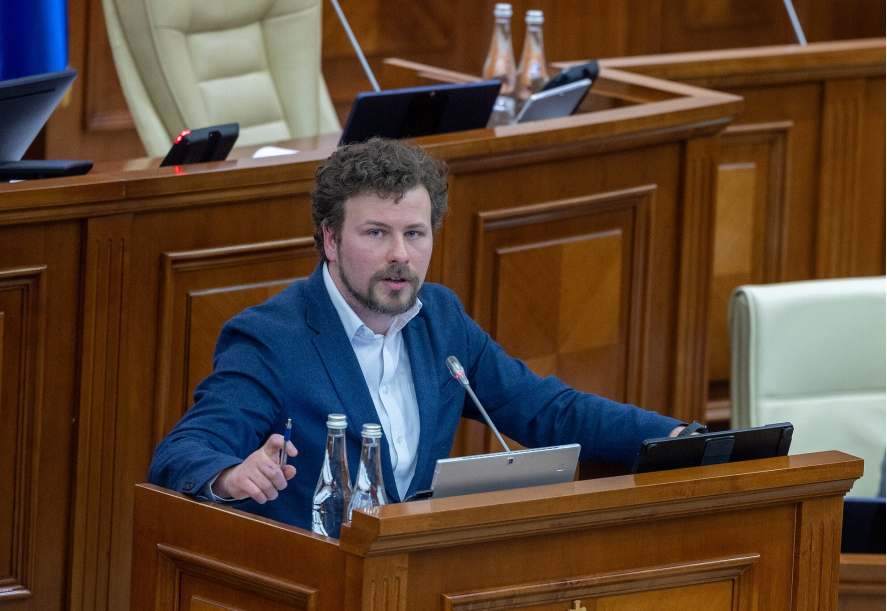
Territorial Education Agencies (TEAs) will be established in the Republic of Moldova, replacing the current district and municipal education directorates, departments, and divisions. The provision is included in the bill on the “Restart in Education” reform. The document was approved by Parliament in the second reading, TRIBUNA reports.
The TEAs will operate under the Ministry of Education and Research and will administer the school network, acting as the founders of primary schools, gymnasiums, high schools, and special education institutions. They will be responsible for selecting and evaluating school principals, monitoring the quality of education, managing infrastructure and school transportation, as well as implementing measures related to inclusion, school safety, and the digitalization of administrative processes. Kindergartens and extracurricular institutions will continue to be administered by local public authorities.
The overall objective of the bill is to ensure access to quality education for all children across the country by creating a unified, professional, and accountable management system for general education. According to the explanatory note accompanying the legislative initiative, the reform is intended to ensure the effective and consistent implementation of education policies, reduce territorial disparities, strategically develop the school network, and ensure the efficient use of public resources in the interest of education quality.
The agencies will be headed by directors selected through competitive procedures and appointed to public office for five-year terms. The position of TEA director may be held by the same person for a maximum of two terms, whether consecutive or not. Employees of the existing district and municipal education directorates may be transferred to vacant positions within the new agencies. At the same time, a proposal by the People’s Assembly of the Autonomous Territorial Unit of Gagauzia was accepted, providing that the director of the TEA in Gagauzia will be appointed by a decision of the People’s Assembly.
The new provisions also stipulate that, after schools are transferred to the TEAs, they will receive direct funding from the state budget, calculated on the basis of a standard per-student cost. Currently, educational institutions are funded through local budgets. School budgets and reports on their execution will also be published online, allowing parents and communities to monitor how public funds are being used.
The Territorial Education Agencies will continue to finance extended-day programmes and arts or sports classes at primary and lower-secondary education institutions that offered such programmes during the 2025–2026 academic year.
Other provisions of the bill concern the regulation of interim appointments to the positions of school principal and deputy principal, adjustments to the regulatory framework for admission to higher education by standardizing access conditions for candidates, and establishing the financial framework necessary to ensure the sustainable operation of the Centre for Information and Communication Technologies in Education (CTICE).
The document also regulates the use by the TEAs of publicly owned property belonging to administrative-territorial units, through its transfer for use under a gratuitous loan agreement (comodat), and grants the agencies authority to approve school districts for primary and lower-secondary institutions in consultation with local public authorities.
For the second reading, the bill was supplemented with transitional provisions designed to ensure a clear, predictable, and functional phased implementation of the reform. The transfer of educational institutions and the implementation of the new funding mechanism are planned for January 1, 2027.
For institutions in the municipalities of Chisinau and Balti, as well as in the Autonomous Territorial Unit of Gagauzia, the deadlines have been postponed until January 1, 2028, allowing for the gradual adjustment of structures and helping prevent disruptions to the operation of educational institutions.






 Loading ...