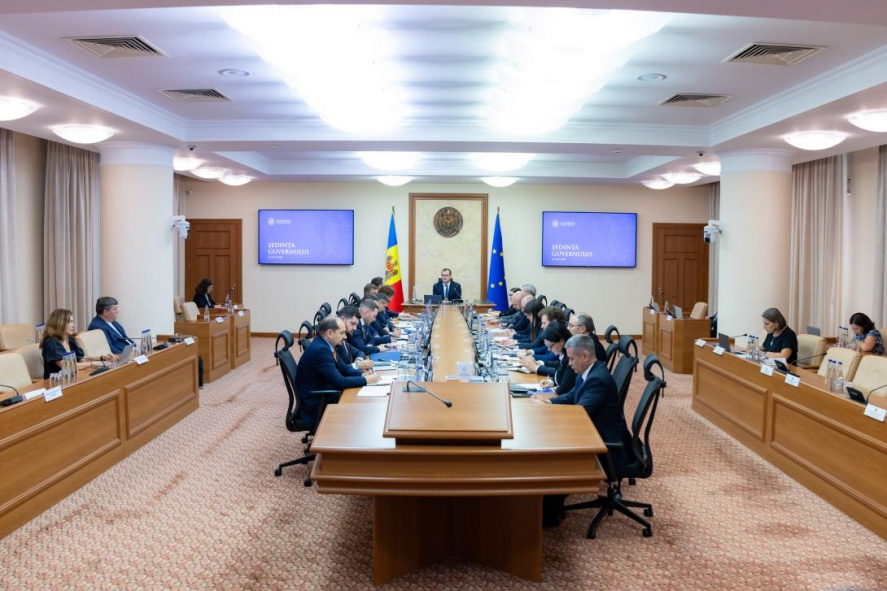
The Government has approved the Measures Plan for preparing for the 2026–2027 heating season. The document is approved annually and is intended to ensure better coordination among the institutions responsible, risk monitoring, and prompt intervention should vulnerabilities arise in the supply of energy resources, TRIBUNA reports.
The plan includes 52 concrete measures and scenarios designed to ensure the continuity and security of energy supplies for citizens and the economy during the cold season, including electricity, natural gas, heat, and petroleum products, while also preparing authorities and operators for potential supply disruptions.
The document was developed against the backdrop of a continued difficult regional energy environment, marked by volatile gas prices, risks associated with the war in Ukraine, and the effects of drought on electricity generation in the region. Under these circumstances, the main objective is for the Republic of Moldova to enter the cold season with diversified supply sources, sufficient reserves, and mechanisms prepared for crisis situations.
“Gas prices on international markets have risen significantly, while the severe drought in the region has affected electricity generation and, inevitably, had an impact on the market as well. The Government has taken all these risks into account and prepared the necessary measures to ensure that the country gets safely through the cold season. Every family must have access to energy and be able to get through the winter safely, regardless of what happens on international markets,” Energy Minister Dorin Junghietu said.
Thus, the plan for the 2026–2027 season establishes clear deadlines and identifies the institutions responsible for implementing measures directly related to natural gas, electricity, petroleum products, security, and energy efficiency.
A priority for the cold season is strengthening electricity supply security and increasing the country’s capacity to use energy available on regional markets. In this context, the plan calls for the commercial operation of the 400 kV Vulcănești–Chișinău line to begin by the end of October, measures to increase commercial transmission capacity at the border with Romania, and maintaining 110 kV lines in operational condition so that, if necessary, they can be used to supply the Republic of Moldova from Romania’s power system.
The document also provides for assessing the possibility of meeting electricity demand through organized markets and imports. The National Agency for Energy Regulation will prepare the launch of the organized market for bilateral contracts.
In the natural gas sector, the plan focuses on diversifying supply sources and routes, as well as continuously strengthening reserves. Energocom is to replenish its security stocks by October 1, 2026, while by November 1, 2026, all natural gas suppliers must complete the establishment of stocks equivalent to 15% of annual consumption, in proportion to their market share.
Moldovagaz, the entity designated as responsible for supplying natural gas to the Transnistrian region, will also ensure stocks equivalent to 15% of total consumption on the left bank of the Dniester. According to the document, for the 2026–2027 cold season, a volume of 135.9 million cubic meters of gas has been established to be stored by November 1 for supplying the Transnistrian region.
Particular attention is also being paid to the technical preparation of infrastructure. By October 15, 2026, the necessary preparations for the cold season are to be completed at energy facilities, heating networks, and natural gas and electricity transmission and distribution networks.
Reserve power sources for vital consumers, operators’ intervention capacity, alternative fuel reserves, and stocks of materials and equipment needed for emergency interventions will also be checked. The plan also includes measures to strengthen the protection of energy infrastructure against cyber risks.
Winter preparedness is not limited to securing resources; it also involves reducing consumption wherever possible. Public institutions will monitor and report their energy and water consumption on a monthly basis, identifying unjustified consumption and proposing measures for more efficient use of resources. At the same time, work carried out under energy-efficiency programs implemented by the National Center for Sustainable Energy will be strengthened, with a focus on vulnerable consumers and the residential sector. Solutions will also be proposed to increase the number of buildings connected to centralized heating systems.
The plan also provides for checking the compliance of petroleum products sold during the cold season, both at storage facilities and filling stations. Inspections will focus on compliance with quality requirements and the technical parameters established for fuels, as well as on replenishing existing stocks. Experience from the previous season showed that low temperatures can affect diesel fuel filterability and the operation of vehicles, generators, and other critical equipment.




 Loading ...