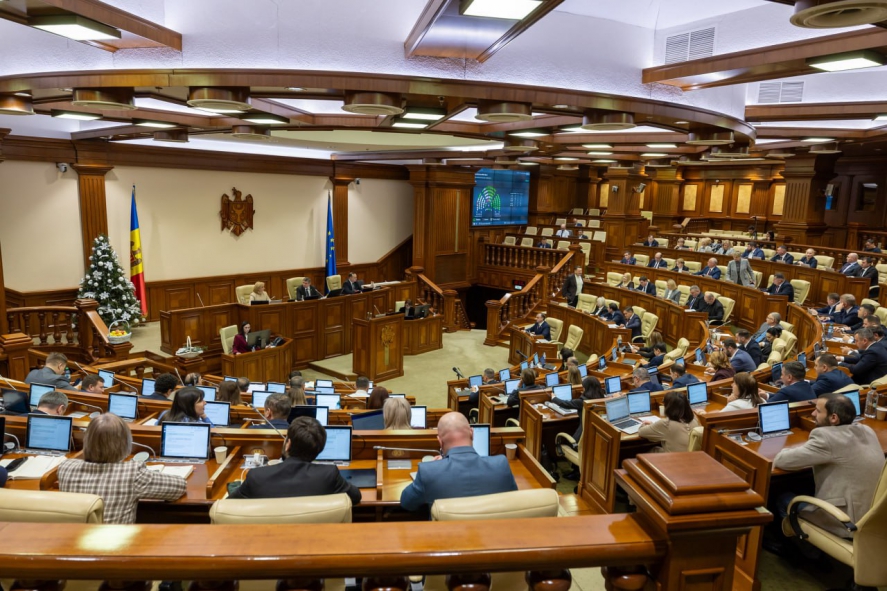
Parliament approved in the third reading a draft law on public participation in the decision-making process. The legislative initiative aims to align national legislation on public participation with European principles and standards by strengthening participatory democracy, reports TRIBUNA.
The law establishes a civic initiative mechanism. Citizens over the age of 16 will be able to propose that public authorities initiate the development of decisions of public interest at either the national or local level.
A civic initiative may be registered on the e-Democrație platform or submitted to public authorities electronically or on paper. It must describe the problem to be addressed, indicate the proposed solution, and specify the level of action concerned — national or local. Initiatives containing offensive language or threats to national security, public order, or public health will not be accepted.
After submission, the relevant authority will have up to 10 working days to verify the initiative’s admissibility. Once registered, the initiative will enter a public support stage, conducted exclusively through the e-Democrație platform, with users authenticated through government electronic authentication services. The author of the initiative will be able to choose the duration of the support campaign, which may last between one and six months.
For an initiative to be officially considered by the authorities, it will have to collect a minimum number of signatures. National initiatives will require the support of at least 10,000 citizens, while thresholds for local initiatives will be established progressively according to the size of the community. Initiatives that collect the required number of signatures will be officially examined by the relevant public authority.
Through the e-Democrație platform, citizens will also be able to submit requests for access to information of public interest, including information related to the decision-making process.
The legislation also introduces the possibility of using advanced forms of public participation, such as citizens’ assemblies and national dialogues, when traditional consultation mechanisms are deemed insufficient.
The bill also addresses public consultations on legislative initiatives. Publishing consultations on the particip.gov.md platform will become mandatory, while consultation periods will be extended, giving citizens and interested organizations more time to analyze proposals and submit recommendations.
During the third-reading debate, MP Vasile Grădinaru announced that he was withdrawing from his amendment the provisions concerning recommendations submitted orally by interested parties. Such recommendations will therefore be included in the minutes of the public consultation meeting and considered under the same conditions as recommendations submitted in writing.
The draft law on public participation in the decision-making process was prepared by the State Chancellery with the support of Council of Europe experts and a working group comprising representatives of central public authorities and civil society. The legislation aims to bring Moldova’s national framework on public participation in line with European standards.
The new provisions will enter into force on January 1, 2027, while the civic initiative mechanism will become applicable starting January 1, 2028.





 Loading ...