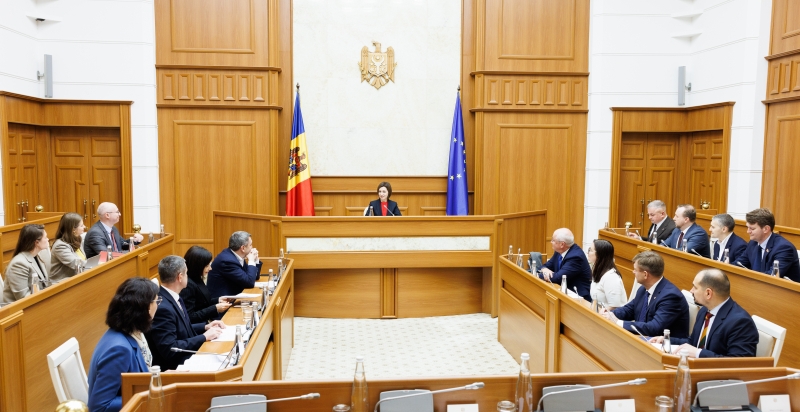
The National Security Council (NSC), convened today by President Maia Sandu, approved the Democratic Resilience Strengthening Plan for 2026–2027. The document sets out the main directions through which the state will prevent external interference and protect democratic processes.
The plan was developed based on the experience of the last three elections, during which Moldova was the target of unprecedented foreign interference: illegal financing of political activities, disinformation campaigns, cyberattacks, and attempts to destabilize public order.
To address these risks, the document provides measures to strengthen information security, improve financial monitoring, consolidate cyber defense capacities, and enhance cooperation among responsible institutions. Some actions are classified to avoid compromising the state’s protection mechanisms.
The adoption of the plan is justified by vulnerabilities identified during recent electoral processes and by the state’s obligation to ensure that democratic exercises in the Republic of Moldova take place safely and free from foreign influence. The document gives public institutions a clear course of action for 2026–2027 and reinforces efforts to safeguard national security in a complicated regional context.
At the same meeting, the NSC also approved its own organizational and operational regulations, in line with the new National Security Law of 2025. The regulations define clear procedures for preparing meetings, introduce preliminary technical sessions, and establish the decision-making process, including binding decisions. They also require the presentation of an annual report to the parliamentary committee on national security, defense, and public order, thereby strengthening democratic oversight of the Council’s activity.
In her statements, President Maia Sandu emphasized the importance of cooperation among state institutions: “I continue to rely on the cooperation of all competent institutions. Only through joint and well-coordinated efforts will we succeed in strengthening the resilience of the Republic of Moldova.”
The NSC, chaired by the head of state, brings together the country’s leadership and institutions in the fields of defense, public order, and security, fulfilling the role of coordinating national security policies.





 Loading ...