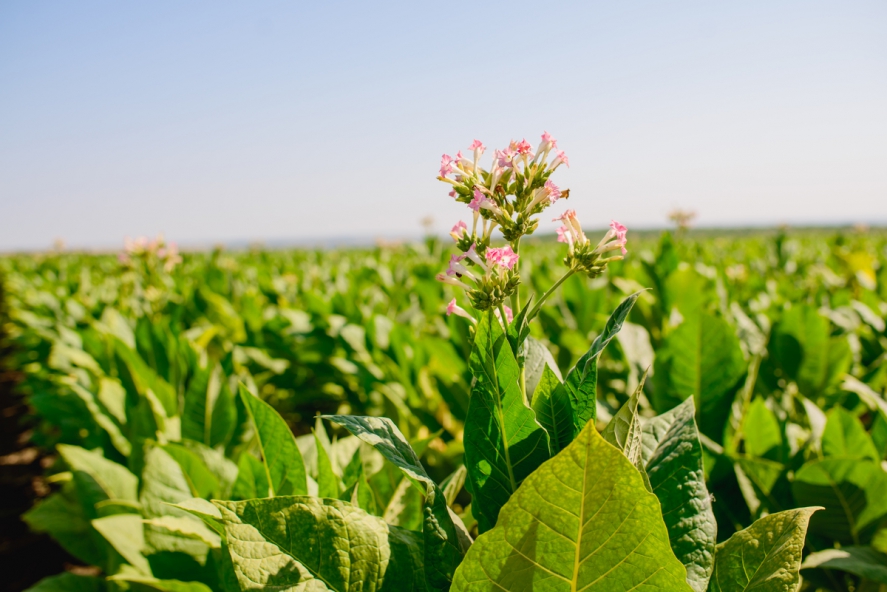
At one time, the tobacco industry was a cornerstone of Moldova’s economy. During the Soviet era (reference year: 1975), tobacco production accounted for 22.9% of the GDP, and 24.3% of the country’s total workforce was engaged in the tobacco sector. Since gaining independence, the Moldovan state has not only failed to support this industry, but has often appeared to actively work toward dismantling both tobacco cultivation and tobacco product manufacturing.
As a result of the so-called “fight against smoking,” a key sector of the national economy has been destroyed. Yet paradoxically, the consumption of tobacco products and the number of smokers have continued to rise. Experts estimate that if Moldova were to resume tobacco cultivation on just 20,000 hectares of land, this could generate approximately 30,000 direct jobs (mainly in tobacco harvesting), with another 10,000 jobs created in related sectors. Tobacco harvested in that area could contribute 1.05% to GDP. Additionally, easing the pressure on domestic producers of tobacco products could have positive effects on the national budget and job creation.
However, such change requires a new approach—one that begins by studying relevant examples and best practices from other countries that prioritize the development of their tobacco industry. Below, we present several examples that are certainly worth the attention of Moldova’s decision-makers.
1. The United States
The United States has not ratified the World Health Organization’s Framework Convention on Tobacco Control (FCTC) and recently even withdrew from the WHO. Domestic tobacco regulation is largely overseen by the Food and Drug Administration (FDA). Since 2009, under the Family Smoking Prevention and Tobacco Control Act, the FDA has had authority over tobacco products. However, the rules imposed by the FDA are more flexible than WHO recommendations. For example: flavored products are not completely banned (only menthol cigarettes were recently prohibited); advertising and sponsorships are not fully restricted; and new products—including e-cigarettes—may be sold through authorized marketing applications.
2. Sweden
Sweden is the only EU country that allows the sale of snus (a form of oral tobacco), despite the FCTC ban.
Moreover, Sweden has relatively lenient outdoor smoking regulations compared to other European countries, although indoor smoking restrictions are stricter.
3. Poland
Like other Eastern European countries, Poland maintains lower tobacco taxes than the EU average, even while implementing EU tobacco control regulations. This reflects certain economic concessions tailored to Poland’s socio-economic context, aimed at supporting the domestic tobacco industry.
Tobacco is grown in southeastern regions of Poland. Although direct subsidies have been gradually phased out under the Common Agricultural Policy (CAP), the sector still benefits from state support. Following its EU accession in 2004, Poland continued to assist tobacco growers with funding for modernization and restructuring.
4. Bulgaria and Romania
Both countries comply with EU regulations, but economic pressures necessitate support for their domestic tobacco sectors—especially due to the large number of tobacco farmers and factories. Although Bulgaria and Romania adhere to FCTC and EU laws, they apply certain exceptions to protect economic interests. Consequently, tobacco taxation is often lower than in Western Europe. Additionally, plain packaging laws have been implemented only partially or with delays.
In Romania, tobacco producers receive financial support and subsidies for crop restructuring and transition to other types of agriculture. After joining the EU, Romania adopted various support measures for tobacco farmers, including direct subsidies. Although these are smaller than those in Western Europe, they continue to support the modernization of the sector.
5. Hungary
Hungary has implemented many FCTC provisions, but there are regulatory gray areas. For instance, a large market still exists for low-cost tobacco products targeting the general population.
6. China
China is the world’s largest tobacco producer and provides significant subsidies to tobacco farmers. The Chinese government supports tobacco agriculture through direct subsidies and infrastructure investment. Tobacco growers receive financial aid to sustain farming activities and improve production. Furthermore, the government has implemented price stabilization and smallholder support programs aimed at ensuring consistent income for tobacco farmers.
7. India
India is the second-largest tobacco producer in the world, and its government provides various subsidies for tobacco cultivation. Farmers receive financial aid and assistance with irrigation infrastructure and agricultural technology, which enhance tobacco productivity. These subsidies are primarily aimed at farmers in Andhra Pradesh, Karnataka, and Gujarat—the main tobacco-producing regions. India also funds conversion programs to help farmers transition from tobacco to alternative crops.
These are only a few examples, but the list could go on. The key point is that Moldova’s decision-makers must recognize the real potential of reviving the tobacco industry as a driver of economic growth. There’s no need to reinvent the wheel—only to study and adapt proven strategies from other nations.
It is essential to understand that revitalizing the tobacco industry in Moldova does not mean disregarding public health. Rather, it is about striking a balance between prevention efforts and economic development. Clearly, countries like the U.S., China, India, and several EU member states have adopted flexible policies tailored to their economic and social realities. Through subsidies, technological support, production modernization, and reasonable fiscal policies, these nations have managed to sustain a vital sector that creates jobs and generates significant public revenue.
In Moldova, ignoring this industry altogether has ironically led to increased consumption and imports—without any tangible benefit to the local economy. It is time for policymakers to move beyond the rigid paradigm of prohibition and embrace a pragmatic strategy focused on sustainable development.
An active partnership between the government, farmers, and the industry is needed—one inspired by international models. Revitalizing this sector could create tens of thousands of jobs, support rural communities, boost public revenue, and restore a traditional Moldovan industry with real export and modernization potential. We don’t need to invent anything new—just learn from what already works elsewhere.


 Loading ...