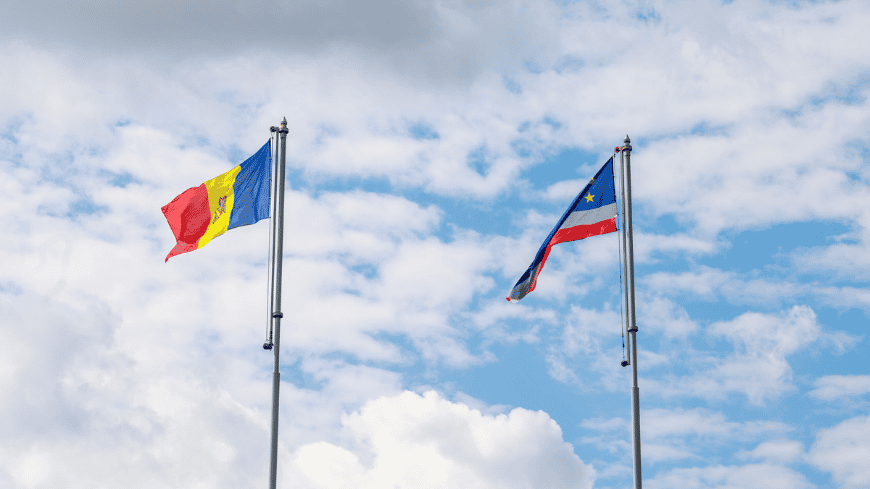
Commenting on the Congress of Local and Regional Authorities of the Council of Europe mission to observe the 15 November 2026 elections for the Governor (Bashkan) and the members of the People’s Assembly of Gagauzia, Mélanie Lepoultier (France, ILDG), Head of delegation, stated:
“On the election day, seven Congress teams were deployed throughout the Autonomous Territorial Unit of Gagauzia. We visited 66 out of 67 polling stations and observed an overall calm, well-organised and orderly electoral process, from opening to counting. The professional, cooperative and well-trained electoral officials, who were overwhelmingly women, conducted electoral procedures in a transparent and collegial manner, in line with integrity safeguards and international standards. The quality of the training programme that the certified electoral officials had to complete contributed significantly to this good conduct. Procedures were generally uniformly followed and no major irregularities were observed. The reduced use of supplementary voters lists pointed to an overall improvement of the accuracy of the registers, but some cases of people being turned away for issues with their addresses were still observed.
However, our observers identified some inconsistencies, including some breaches of ballot secrecy due to closeness of the booths or voters not folding their ballot papers, and some shortcomings during the counting procedures. We regretted the sometimes poor conditions in which commissioners had to work. The observers deplored that public infrastructures were generally in a very poor state. In several cases, there was no heating and little light. A case of a polling station in an abandoned building raised concern about safety risks in case of emergency during the vote. Isolated cases of political party representatives interfering or journalists hindering the process were noted. Two teams followed mobile ballot boxes. They observed no anomalies but no uniform approach to guaranteeing the secrecy of the vote.
To further develop inclusiveness, we also believe that ballot papers in all three languages could be made available at the table, rather than at times distributed upon request. Multilingual information materials should also be displayed more systematically inside and outside polling booths. In addition, accessibility for all remained unsatisfactory in most polling stations visited and needs to be addressed urgently.
These elections took place following a prolonged institutional impasse, also related to the delaying of the People’s Assembly elections for a year and the vacancy created by the sentencing of the last elected bashkan on charges of electoral corruption. Prior to the start of the election period, significant amendments to the Electoral Code were adopted to resolve this situation. These amendments modified institutional arrangements governing regional elections and changed the responsibilities and appointment procedure of the Central Electoral Council of Gagauzia. They further integrated regional elections into the national electoral framework and introduced changes to the electoral system and the campaign oversight.
At the same time, we found that some amendments extended beyond the scope of the Constitutional Court decision of 9 July 2026 and given their contentiousness, should have been preceded by broader search for consensus or more progressive implementation. The delegation will therefore closely follow the release of the opinion of the Venice Commission on the said amendments and recommends submitting such requests for opinions prior to their final adoption in the future. In addition, the delegation underlined the tight calendar to adapt to the new legal framework, which created an increased workload for electoral officials and candidates.
We appreciated the introduction of stricter campaign financial reporting obligations, a longstanding Congress recommendation, but several sources reported the difficulty to navigate the new requirements under the compressed deadlines, despite the administration’s readiness to help.
On the pre-election period, we found the campaign competitive, online and in campaign events. The feared boycott did not materialise and voters could choose from a wide range of candidates, including many independents and party-affiliated candidates, who presented their platforms through several televised and radio debates and interviews. The media coverage was overall assessed as more balanced than in the past. Regrettably, women remained grossly underrepresented in yesterday’s elections.
We welcomed awareness campaigns towards voters and candidates and in particular, the introduction of a Code of Conduct for the campaign by the Central Election Commission, endorsed by many candidates, which advocated for a commitment to mutual respect and electoral integrity, but some points still remain to be clarified in law and in practice. Sexist comments continued to undermine women’s participation and were part of a broader aggressive tone between candidates and towards journalists. In addition, worrying allegations of misuse of administrative resources, use of public facilities, undeclared campaign expenditure and voter bribery were reported. Some candidates also mentioned difficulties with reporting campaign events and volunteers’ involvement, with the police often coming to scrutinise events and verify information.
In parallel, the delegation was informed of persisting instances of misleading information and disinformation, aiming to reduce trust in electoral processes and targeting the relationship between authorities in Chisinau and Comrat. Local fact-checkers, observers and journalists as well as the election administration also reported cases of online coordinated behaviours favouring some candidates, sometimes from abroad. The delegation found that, since the Congress’ most recent election observation mission to the Republic of Moldova in 2023, institutions have built strong resilience to foreign interference and efforts have started to bear fruit. Continuing such monitoring will be necessary to ensure that alleged violations are thoroughly investigated and are subject to proportionate sanctions.
Finally, we appreciated the openness and cooperation of the authorities and electoral administration in Chisinau, Comrat and throughout the Autonomous Territorial Unit to reflect on electoral practice. All strongly expressed hope for free and fair elections in the ATU Gagauzia. We believe that these elections represented a significant opportunity to reaffirm democratic legitimacy, strengthen institutional cooperation between all levels and reinforce public confidence in democratic institutions in Gagauzia.
The Congress remains available for further dialogue and cooperation on the matters highlighted above and in the scope of our longstanding cooperation, to foster citizens’ participation in regional democratic life and most notably to support women and the youth to stand for eligible positions”.
A 15-observer delegation of the Congress of Local and Regional Authorities of the Council of Europe, led by Mélanie Lepoultier (France, ILDG), Head of Delegation, and Konstantinos Koukas (Greece, EPP/CCE), Deputy Head of Delegation, concluded its mission to observe elections of the Governor (Bashkan) and the members of the People’s Assembly, in the Autonomous Territorial Unit of Gagauzia held on 15 November 2026.
Prior to election day, the delegation held meetings on 13 and 14 November 2026 with key stakeholders involved in the elections, as well as representatives of the diplomatic corps, the media and civil society. The delegation also held discussions with political parties and candidates running in the elections.
Further to the Congress mission, a draft recommendation will be discussed at the Congress session in March 2027 in Strasbourg (France).
 Loading ...