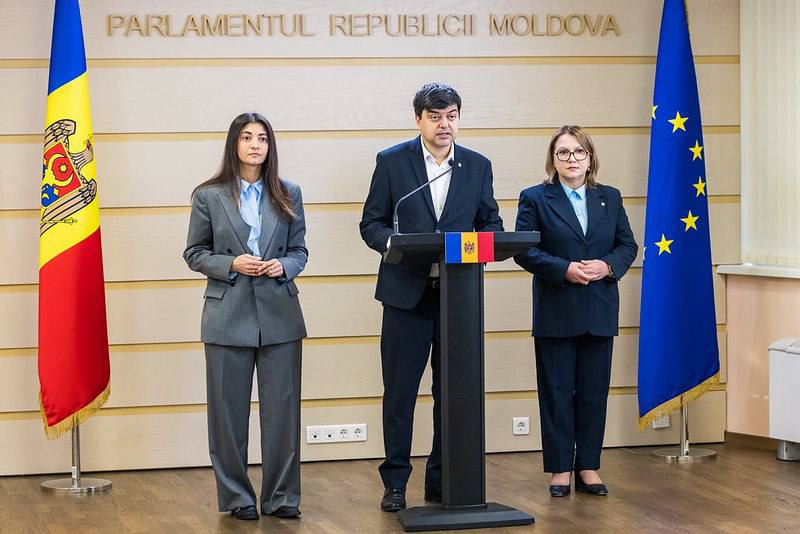
Poverty, limited access to social and medical services, violence, and insufficient support for vulnerable families affect tens of thousands of children in the Republic of Moldova. On the occasion of International Children’s Rights Day, MPs from the National Alternative Movement (MAN) Party held a press conference in Parliament, during which they highlighted the main challenges in child protection and called for concrete measures from the authorities, TRIBUNA reports.
MAN MP Gaik Vartanean drew attention to the alarming level of child poverty. According to data from the National Bureau of Statistics (NBS), in 2025, more than 30% of children in Moldova lived in absolute poverty, while in rural areas, nearly 60% of children faced deprivation affecting their basic living conditions.
The MP criticized the Government’s objectives, which aim to reduce absolute child poverty by only 1.4 percentage points by 2030.
“A reduction of 1.4% over five years is a modest objective, given the scale of the problem. We believe it is necessary to revise the poverty reduction target and establish annual goals, supported by financial resources and measures tailored to vulnerable families,” Gaik Vartanean stated.
The MAN MP also called for increased support for vulnerable families and the adjustment of social benefits to rising prices.
MAN MP Angela Cutasevici addressed issues related to protecting children from violence, preventing family separation, and ensuring the proper functioning of social services.
According to data from the Ministry of Labour and Social Protection, at the end of 2025, Moldova had 17,416 children registered as being at risk, of whom 14,000 lived in rural areas. During the same year, 788 children were registered as victims of violence, while 867 were placed in emergency care.
Angela Cutasevici also referred to the European Commission’s Report, which highlights the lack of specialized services for children, the difficulties faced by children with disabilities, and problems within the social assistance system following the RESTART reform.
“Every case must have an identified person responsible, clearly established measures, and effective monitoring. Delays in sharing information or the lack of services can worsen a child’s situation,” Angela Cutasevici emphasized.
The MP called for faster intervention in cases involving children in difficulty, the expansion of specialized services in local communities, and stable funding for community-based services.
MAN MP Olga Ursu, in turn, highlighted the need for investment in early childhood education, children’s health, and parental support.
According to the national assessment presented in July by the Ministry of Education, only 66% of the children assessed demonstrated school readiness across all four areas analyzed. Thus, approximately one in three children did not reach the expected level in at least one of these areas.
Olga Ursu called for the expansion of early intervention services, access to speech therapists, psychologists, and other specialists, as well as support for parents, regardless of where they live or their family’s financial situation.
“Every child deserves to be seen, supported, and given the opportunity to build their own future. And that opportunity should not depend on their family’s financial means or the place where they were born,” Olga Ursu stated.
The MAN MPs emphasized that protecting children’s rights must remain a permanent priority for the state, supported by concrete measures and adequate funding.
On the occasion of International Children’s Rights Day, MAN MPs extended their best wishes to all children, wishing them a happy and safe childhood filled with love, good health, and opportunities for a better future.



 Loading ...